

I’m trying to wrap my head around the bittersweet debate of pairing wine with chocolate. I certainly have my own thoughts on the subject (which I’ll get into shortly) but what’s interesting is that for years, no one openly, at least in my recollection, debated that wine didn’t go with chocolate. Heck, it matches as well as peanut butter and chocolate, right?
Well, according to some, not exactly. I’ve come across a few posts that debunk the myth (here and here) and I’ve talked about this subject with some of my colleagues, and I’ve been surprised by some of their responses – the two don’t work so well together. When I asked this same question to my twitter wine aficionados’, answers varied greatly, and I have to admit I strongly agree with industry experts that “great” pairings are few and far between.
If you think about it, most of us go into pairings somewhat color blind with so many choices that span across the types of chocolate, cacao content, wine varieties and styles, making it impossible to hit the right set of combinations to solve the rubik’s cube puzzle. If you hit the right combinations, you’re a genius!
To really understand its complexity, it’s helpful to know a few basic rules – which is to balance the sweetness of the wine with the sweetness of the chocolate. If either one veers off course (e.g. if the wine is much sweeter than the chocolate and vice versa) you’ll come in for a crash landing. You will know when it happens when you taste a bitter sensation or experience a boring, flat, uninteresting combination.
Although I’ve had plenty of opportunities to experiment with chocolate and wine pairings, I thought it would be interesting to conduct a little Myth Busters activity to test out a number of combinations, so that’s what Marc and I set out to do.
Using modern-day science and an expensive piece of top-secret tasting equipment (I’m only joking here – its not brain surgery, just taste buds!) we’ll seek the truth to report on what we think works best.
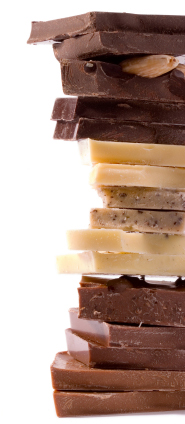 White, Dark or Milk Chocolate, How do I decide?
Everyone has an opinion on this subject, which is why we are testing a number of combinations. Some say chocolate and wine doesn’t work – Period! Others recommend milk and white chocolate paired with white wines and brut – others oppose and suggest Pinot noir, Merlot and Sherry. As for dark chocolate, many say that most reds will do, but you have to be careful not to select a tannic red wine – too much tannin can break a pairing.
We pulled recommendations from a number of sources and ran them through a series of tastings. We selected wines from various regions that best represent the typicity of the area and left out the producer name to protect the innocent. Here are the results:
Milk Chocolate Experiment
We selected a Milk Chocolate with real cocoa butter, whole milk powder and pure natural vanilla.
Columbia Valley Merlot – the pairing had a smooth entry, but the flavors seemed to separate at the end. We wouldn’t personally recommend this paring.
Columbia Valley Merlot #2 – The milk chocolate worked with this Merlot;
provided a smooth entry and worked harmoniously.
Carneros Pinot Noir – Unfortunately, the balance between the sweetness of the chocolate and the wine was off kilter, so this particular match did not work particularly well.
German Riesling – The pairing was smooth and surprisingly likeable.
Sparkling Brut – Marc and I disagreed on this paring. I thought the flavors were flat and the chocolate seemed to overpower the sparkler. Marc liked the match and enjoyed the hazelnut and vanilla flavors that came out in the pairing.
White Chocolate Experiment
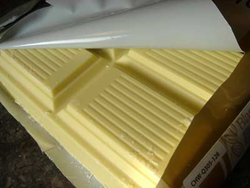 We used a 0% cacao 30% cocoa butter white chocolate. The ingredients in our chocolate had sweet flavors of cream, honey, vanilla and caramel. Many sources recommend pairing white chocolate with Sherry, a Moscato d’Asti, or a Muscat d’Orange so this is what we tested:
Sherry – the combination brought out a cream and butterscotch flavor which was quite nice; it was a relatively good match that really picked up the creaminess of the chocolate.
Moscato d’Asti – Marc and I didn’t agree on this pairing. We both thought the combination picked up the creaminess of the chocolate, but I thought the chocolate dominated the flavor profile a bit too much. Marc picked up almond and vanilla characteristics that accentuated his experience.
Muscat d’Orange – Marc and I didn’t agree on this paring either! I liked the combination because it had a smooth entry, perfect balance and a nice orange zest finish. Some might think the orange flavor might dominate the chocolate, but in my humble opinion, it worked. Marc didn’t like the pairing as much as I – he thought the pairing was dissipated and shallow.
Dark Chocolate Experiment
We chose five high quality decadent organic chocolates ranging from 60 – 91% cacao content. We paired each bar with a number of super premium varieties from different appellations.
Sparkling Brut – The brut did not pair well with higher content cacaos but the 60% offered a little dance of excitement! This paring offered a clean, crisp experience with fruit flavors that shined through. We thought this was a great match. Kudos to our twitter friend BruceVaughn for the Sparkling Brut recommendation.
Dry Creek Cabernet – The 91% cacao pairing was bitter and the 84% didn’t fair well either – it sort of offered a scorched, dry, bitter flavor. The 75% cacao pairing wasn’t bad, but the wine seemed to overpower the chocolate components. Overall, we were extremely disappointed with this pairing. The wine was ripe with round tannins, so we were a bit surprised this paring didn’t work well.
Mendocino County Zinfandel – This wine wasn’t overly powerful in the tannin department, yet nothing worked with it. At 60%, the wine and chocolate seemed to separate in your mouth; 74% was semi-flat – ok, but not exciting. 84% and 91% was very dry and bitter.
Willamette Valley Pinot Noir – Once again, the high cacao content did not do so well – incompatible to say the least. The 60% and 75% cacao offered a semi-smooth entry, but I wouldn’t call it a perfect match; the balance was good, but the experience was not stimulating.
Columbia Valley Merlot – We tasted a low-tannin Merlot for this experiment. As expected, the higher content cacaos did not make a good match. The flavors were bitter and did not work well together. The 60% and 74% cacaos were ok, but it was nothing to write home about – 84% and 91% was dry and bitter. The bottom line is that we wouldn’t personally recommend pairing dark chocolate with Merlot – it just didn’t work well.
Columbia Valley Syrah – all cacao content pairings were simply flat, uninteresting and boring. In our humble opinion, this particular Syrah did not pair well with chocolate.
Napa Valley Petite Sirah – Unfortunately, all pairings failed miserably. It was far from harmonious and the flavors of the wine and chocolate seemed to separate in your mouth.
Willamette Valley Ruby Port – This was an interesting experiment. The port paired extremely well with both the high level and low-level cacao content. The 91% and 75% cacao content rocked. This match was definitely the frontrunner out of all of our tastings. Strangely enough, the port seemed to overpower the chocolate when paired with the 84% cacao content. Kudos to our twitter friends Small Sips and SbonnerABV for the port recommendation.
THE BOTTOM LINE:
If you’re looking for advice, here’s our suggestions:
White Chocolate: Sherry seems to be a pretty good bet. Depending on your taste
buds, you might also like a Moscato d’Asti or a Muscat d’Orange.
Milk Chocolate: A lighter-styled Merlot or a Riesling seemed to work best in our tasting. Experiment with Sparkling Brut or a Pinot noir.
Dark Chocolate: Port or Sparkling Brut is your best bet. If you’re looking for that epiphany experience, pair the port with a 75% or 91% cacao content or a Sparkling Brut with a 60% cacao content.
…but remember, like a Rubik’s cube, there are so many possible moves that it’s difficult to say with any certainty what’s going to work and what’s not (well, unless you’re a Speedcuber!). Take for example, our dark chocolate experiment. We tried two different Merlot’s from the same region – one worked well and the other did not. Personal preferences also play into the equation. Heck, Marc and I couldn’t agree on what worked with white chocolate even if our lives depended on it, which shows that you can’t always count on general recommendations – it’s really about sampling many variations and finding a match that fits your taste buds. So go grab a glass and try a number of different combinations and find a pairing that knocks your socks off.
Wine Myth Busters signing off.
Photo credit: icanhascheezburger.com and davidlebovitz.com








I love this article, the research you did is great and it proves a lot. I think its all about personal preference and finding the right combination to not overwhelm a persons taste buds! Great suggestions and thank you especially with the impending holiday!
Montinore offers one of the best chocolate and wine pairings I’ve ever had: Their Pinot Port in a chocolate shot glass. I know it sounds slightly crass, but oh my! It’s to die for.
Try sweet Banyuls next time. The sweet red wines that are not fortified, such as Italian Recioto and other passito style wines, work best with Chocolate. In my opinion the naturally lower alcohols coupled with the tension of the fresh-dried fruit notes in these wines offer the best match for chocolate, particularly darker chocolate.
Thank for such an interestin post!
Gregory Dal Piaz
Community Manager
http://www.Snooth.com
I decided a while back that choco-wine pairings may well be the most personal of all gustatory expeirences. For me, I don’t even try milk chocolate. With dark, it’s either Brachetto d’Acqui (moscato-like sweet, sparkling red from Piedmont) or Banyuls (portlike fortified from SW France, but a little more winey).
As for white chocolate, you call that chocolate?!?!? White choc to real choc is like Canadian bacon to real bacon!
I knew someone would comment on white chocolate! I’m not a fan of it whatsoever but I thought I’d give it a shot at this experiment. Personally, I don’t know if it even compares to bacon – maybe ham hocks? :) Just kidding. I like your Piedmont sparkling red pairing. I’ll try that.
Thanks for the comments and recommendations everyone!
Wombatina – I’ve had their Pinot port before and I agree its pretty good.
Gregory – thanks, I’ll definitely try the sweet Banyuls pairing. Sounds like an interesting match.
This is such a great overview of chocolate and wine pairings! I’ve heard so many people talk about how good some matches are and how horribly wrong other matches are but I didn’t know what worked with what or the rules of pairing. Thanks for a great write-up.
[…] would have it, I happened to taste a Moscato d’Asti from the Piedmont region for a recent chocolate and wine pairing and I’ve been meaning to write about this wine for it deserves a little recognition. Timing […]
[…] bookmarks tagged speedcubing Myth Busters: Rubik’s Cube Cat Does Chocolate saved by 5 others GovernorWatts bookmarked on 02/28/09 | […]
Nice article! I’ve never tried white cocolate with a Moscato d’Asti or a Muscat d’Orange. Sounds good.
Thanks for the comments Michele & Brian. Try out a few combos and report back on your findings! ~Pamela
Wait a minute! I think that damn cat beat me at speedcubing once!
For the most part I agree. I think a lot of people expect milk chocolate and Cabernet to taste good. It just isn’t gonna happen IMO.
In my experience, chocolate is best used as a vehicle for some other intensely flavored thing … preferably a nice complementary fruit to the wine. So Willamette Valley Pinot Noir? Fine … a little dark chocolate and some pinot preserved cherries … yum. Or Zinfandel/Syrah with dark chocolate/blackberry ganache? Yum.
I alos love the Banyuls recommendations!
Ryan,
I just got a breather and checked the comments and thanks for having the conviction to say what needs to be said.Have a Happy Valentines, see ya gotta go.
[…] as luck would have it, I happened to taste a Moscato d’Asti from the Piedmont region for a recent chocolate and wine pairing and I’ve been meaning to write about this wine for it deserves a little recognition. Timing […]
[…] Myth Busters: Rubik’s Cube Cat Does Chocolate […]