
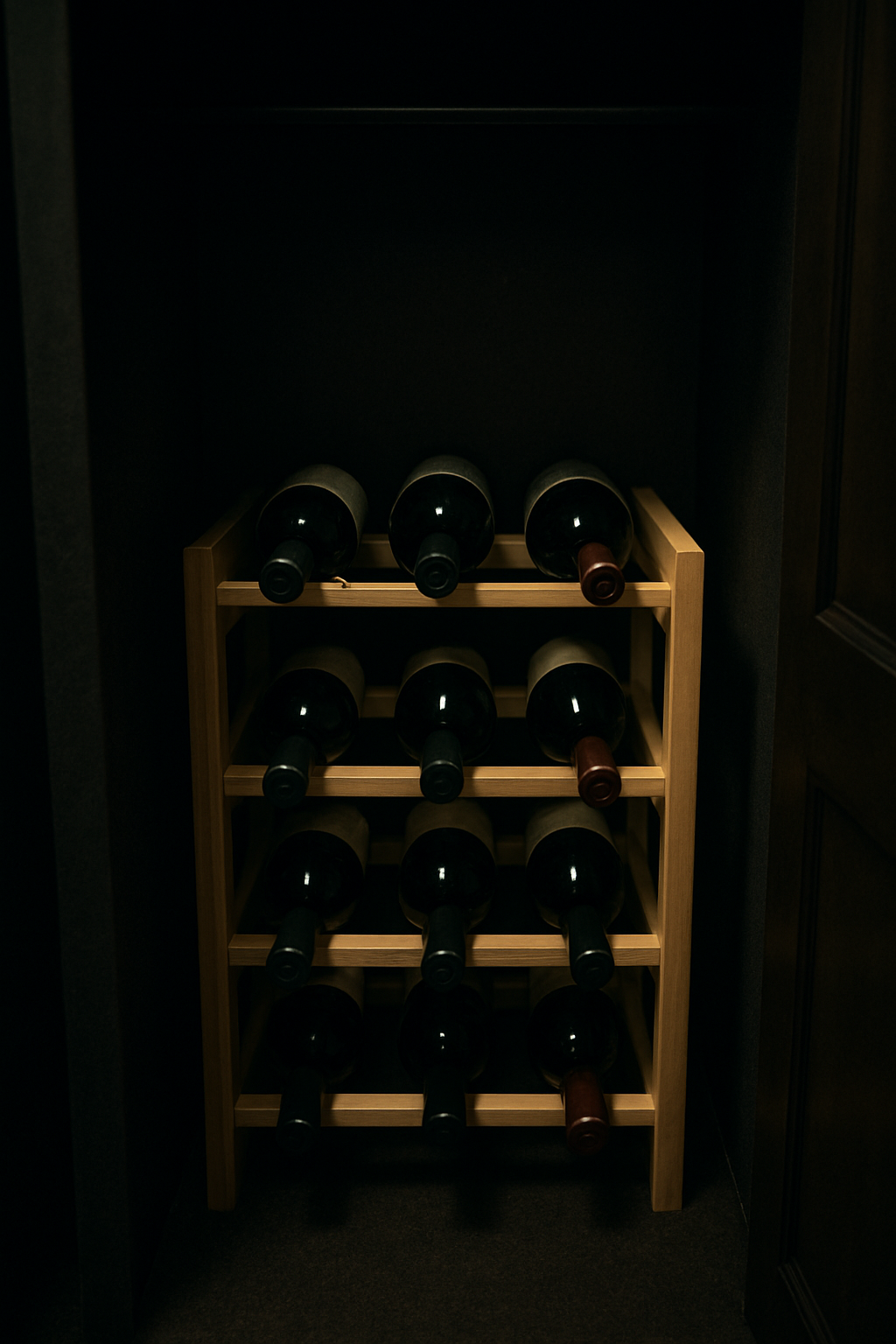
I’ll be honest: When I first ventured into wine, I used to store wine bottles upright in my kitchen. This seemed fine until a friend who actually knew a thing or two informed me that it wasn’t the ideal place to store them. The revelation was humbling—like discovering you’ve been pronouncing “bruschetta” wrong your entire adult life.
The thing about wine storage is that it sounds impossibly precious until something goes wrong. Then you open a bottle you’ve been saving for a special occasion and it tastes like vinegar mixed with regret. I learned this the hard way with a Riesling I’d kept for two years near a sunny window. The special occasion came. The wine was ruined. The lesson was learned.
Here’s the uncomfortable truth: Most of us don’t have wine cellars. We live in spaces with temperamental thermostats, closets packed with things we should have donated years ago, and limited counter space. But we still want to keep a few bottles around—for dinner parties that may or may not happen, for nights when only wine will do, for that vague sense of preparedness that comes with having options.
The good news is that you don’t need a temperature-controlled vault to store wine properly. You just need to understand what wine actually needs, and then get creative about providing it within the constraints of normal human living situations.
What Wine Actually Wants (And Why)
Wine is essentially a living thing in suspended animation, which sounds dramatic but explains why it’s so sensitive to its environment. Here’s what matters:
Temperature consistency matters more than the exact temperature. The ideal is around 55°F, but anywhere between 45°F and 65°F works if (and this is crucial) it stays relatively stable. Wild fluctuations are what really damage wine. Think of it like this: Wine doesn’t mind living in a cool house or a slightly warm one, but it hates living in a house where the temperature swings 20 degrees every day.
Darkness is non-negotiable. UV light breaks down wine compounds and creates off-flavors that make your Chardonnay taste like wet cardboard. This is why wine comes in dark bottles, but the bottles themselves aren’t enough protection for long-term storage.
Humidity should be moderate. Too dry and corks shrink, letting air in. Too humid and labels get moldy (which doesn’t affect the wine but makes your bottles look like they’ve been excavated from a shipwreck). Anywhere between 50-80% humidity is fine, and most homes naturally fall in this range. If you don’t have a Smart Thermostat that monitors indoor humidity, find an app like the humidity checker or this hygrometer.
Position matters for corked bottles. Wine with natural corks should be stored on their sides so the wine stays in contact with the cork, keeping it moist and expanded. Screw caps and synthetic corks can be stored upright, which is actually quite convenient.
Stillness is underrated. Constant vibration isn’t great for wine. This doesn’t mean you need to tiptoe around your wine collection, but storing bottles on top of your washing machine is probably not ideal.
The Best Places in Your Apartment (That Aren’t a Cellar)
The back of a closet, away from exterior walls. This is probably the best option for most apartment dwellers. Choose a closet on an interior wall (exterior walls are subject to more temperature fluctuation), ideally one that doesn’t get opened twenty times a day. The floor of the closet is better than a shelf because heat rises. Anywhere in the back of your bedroom closet, behind your winter coats, and out of light, where it’s’ relatively cool is a good place.
Under your bed. This sounds makeshift, but it actually works remarkably well. Under a bed stays dark, maintains relatively stable temperatures, and is protected from light. Use a wine rack that keeps bottles on their sides, or even just a sturdy cardboard wine case. The main disadvantages are dust accumulation and the fact that you might forget what you have down there. I recommend keeping a simple inventory list on your phone.
A kitchen cabinet far from the stove. If you’re storing wine you plan to drink within a few months, a kitchen cabinet works fine—with caveats. It should be as far as possible from your stove, oven, and dishwasher (all heat sources). Lower cabinets are better than upper ones (as heat rises). And if your kitchen gets very hot when you cook, this isn’t your best option.
The coolest room in your apartment. If you have a room that stays naturally cooler—maybe it’s north-facing, or the radiator is broken, or it’s that weird room that never seems to warm up—claim it for wine storage. Even a corner of that room can work. I had a friend who kept her wine collection in her dining room, which they almost never used and therefore never heated. Thirty bottles lived happily on a small rack in the corner.
What to Avoid (And Why These Seem Like Good Ideas But Aren’t)
The refrigerator for long-term storage. Your regular fridge is too cold and too dry for anything beyond a few weeks. The constant vibration from the compressor isn’t great either. Plus, you need that space for actual food. Reserve the fridge for wine you’re going to drink within the month, or for chilling bottles before serving.
On top of kitchen cabinets. Heat rises, and kitchen cabinets are near your stove and oven. This is where wine goes to die slowly. I learned this lesson with a case of rosé that lasted one summer in this location and emerged in the fall tasting flat and tired.
Near a window. Even if it’s not in direct sunlight, the temperature fluctuations near windows make this a bad spot. Windows are thermal weak points in your apartment—cold in winter, hot in summer, and variable in between.
Anywhere in your kitchen if your kitchen runs hot. If you’re someone who cooks a lot and your kitchen regularly reaches 75-80°F, just accept that the kitchen isn’t where your wine should live. This was a painful realization for me because I wanted my wine nearby while cooking, but proximity isn’t worth ruined bottles.
Wine Racks, Boxes, and Other Storage Solutions
You don’t need expensive wine furniture, but having some kind of system helps. Here’s what actually works:
The original cardboard boxes. If you bought wine by the case, those boxes are already designed for storage. They’re dark, they protect bottles, and they stack. Just store them somewhere cool and stable. This is what I do with wine I’m cellaring for more than a year—it stays in the case, in the back of my closet, and I don’t have to look at it or think about it.
Simple wooden or metal wine racks. These keep bottles on their sides and can tuck into closets or under beds. The stackable ones are particularly useful because you can start small and expand. I like the ones that hold 12-15 bottles—large enough to be useful, small enough to fit in normal spaces.
Wine refrigerators (if you have the space and budget). These aren’t just for wine snobs. A small wine fridge can fit under a counter or in a closet and provides consistent temperature and humidity. They start around $200 for basic models that hold 12 bottles. If you regularly keep wine around and have any intention of cellaring bottles for a year or more, this is worth considering. I resisted for years on principle, then bought one on sale, and now I can’t imagine going back.
Canvas wine totes or fabric bins. For under-bed storage, these work well and protect bottles from dust. The fabric provides a bit of insulation too. Just make sure they’re sturdy enough to handle the weight.
A Realistic Timeline for Wine Storage
Not all wine needs long-term storage, and knowing how long you can safely keep bottles in imperfect conditions helps you plan.
Most wine, most places: 6-12 months. If you’re storing wine in a reasonably cool, dark closet, most bottles will be fine for at least six months, and many will last a year or more without noticeable degradation. This covers the vast majority of wine that normal people buy—bottles in the $10-30 range that you’ll drink within the year anyway.
Better conditions, better wines: 1-3 years. If you’ve found a genuinely cool, stable spot and you’re storing quality wines designed for aging, you can push this to a few years. I’ve kept bottles for two years in my closet setup with good results, though I’m careful about which wines I attempt this with.
Wine refrigerators: as long as the wine is designed to age. With proper temperature control, you’re only limited by the wine itself. A good Bordeaux or Barolo can age for years in a wine fridge. A $12 Pinot Grigio won’t improve with age no matter how perfectly you store it.
What to Store and What to Just Drink
This is the part no one wants to hear: Most wine isn’t meant for long-term storage, and trying to age it won’t make it better.
Drink within a year: Most white wines, rosés, Beaujolais, inexpensive reds, anything with a screw cap that costs less than $20. These wines are made to be enjoyed young. Storing them longer doesn’t improve them—it just delays you from enjoying them at their peak.
Can age 1-3 years in decent conditions: Better Chardonnays, Pinot Noirs, Rhône wines, Riojas, Chiantis, mid-range Cabernets. These have enough structure to develop over a short period, and storing them can be rewarding if you have the space and conditions.
Need proper storage to age longer: High-end Bordeaux, Burgundy, Barolo, Brunello, vintage Ports, Sauternes. If you’re buying these wines with the intention of aging them five or ten years, you really should invest in a wine fridge or proper storage. These bottles represent too much of an investment to risk in a closet.
The honest truth is that I drink most wine within six months of buying it, which means my storage situation doesn’t need to be perfect—it just needs to be good enough. For the few bottles I want to keep longer, I’m more careful about where they go and how long I keep them there. For more on wine aging, check out this post.
A Few Final Observations
I used to feel inadequate about not having proper wine storage. Then I realized that the wine industry has done an excellent job of making us feel like we need specialized equipment for what is, essentially, fermented grape juice that humans have been storing in caves and barrels and regular rooms for thousands of years.
Yes, ideal conditions matter if you’re aging expensive bottles for a decade. But for most of us, most of the time, we just need to keep wine away from heat, light, and dramatic temperature swings. A closet can do that. The space under a bed can do that. A cool corner of a room can do that.
The best wine storage solution is the one that works with your actual life—not the one that requires you to reorganize your entire apartment or spend money you don’t have. Keep your bottles somewhere cool and dark. Drink them within a reasonable timeframe. And remember that even imperfectly stored wine is better than no wine at all, which is the real tragedy.






Leave A Comment