
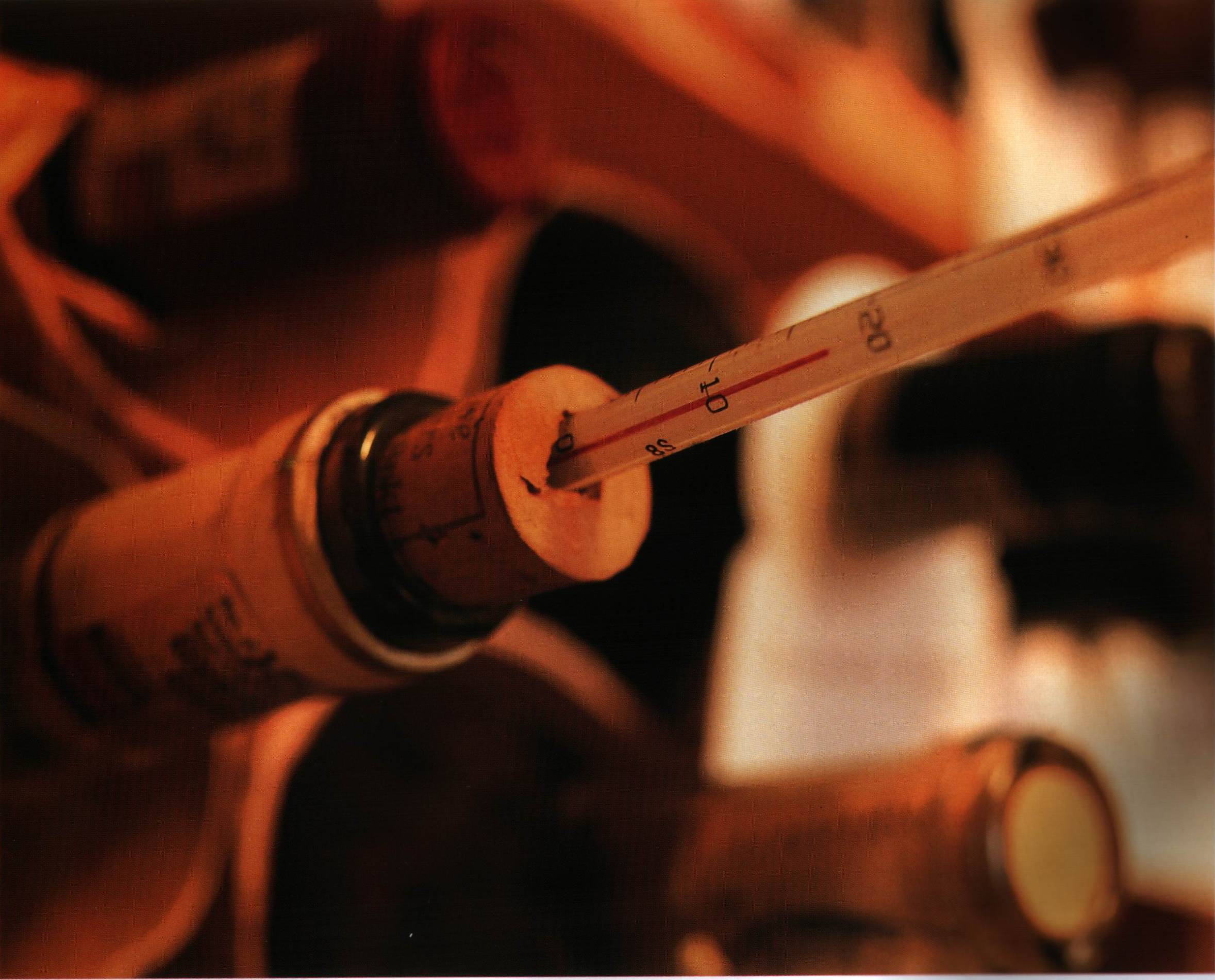
Wine Flaws
At the 2011 Wine Bloggers Conference in Charlottsville, Virginia, there were some complaints about the quality of the wines that were served. Apparently, many of the offending wines originated in midwestern and eastern states. One blogger was so upset, that he posted a scathing article on his website. It provoked a rash of “amen, brother” responses from his readers. Some of the creative adjectives used to describe the wines were “crunk” and “stank.” It made me think someone had watched too many Batman movies.
The back-and-forth of reader comments quickly evolved into a discussion of a blogger’s responsibility to speak the truth. A couple of winemakers favored objective feedback, but wanted honesty in the remarks.
I was not at WBC11. But, my presence was probably not needed to understand what was going on. There are several issues that merit discussion in this flap. Some relate to winemaker mistakes, others to wine bloggers’ lack of familiarity with different grape varieties.
Grape varieties are different
The first issue is the grape varieties. Growing areas in the Midwest and East produce many hybrid varieties and fruit wines, and bloggers are not familiar with them. When you taste something new and different, it had better be real good to register a favorable opinion. Some of the reasons for the varietal selection have to do with tradition, some with grape pests that do not exist west of the Rocky Mountains.
Both conditions date back to Civil War days, when the Ohio River Valley, centered on Cincinnati, was the largest wine-producing area in America. Catawba was the leading grape for white and sparkling wines. Because of diseases for which no preventative chemicals were available, the shortage of vineyard labor during WWI, and the devastation wrought by Prohibition, the Ohio River Valley’s wine industry was wiped out.
Today, one finds varieties like: Aurora, Baco Noir, Catawba, Cayuga White, Chambourcin, Chancellor, Chardonel, Concord, DeChaunac, Delaware, Elvira, Marechal Foch, Niagara, Norton, Seyval Blanc, Traminette, Vidal Blanc, and Vignoles. Classified as Native American varieties and French-American Hybrids, these are all relatively popular grape varieties in the Midwest and East.
The growing areas also produce many vitis vinifera wines, but widespread plantings have been inhibited by fear of the unknown and shortage of industry support programs to lead the way with research. That’s not good because access to the major metropolitan markets is rarely granted to anything other than the popular vitis vinifera varieties. The Native and hybrid varieties almost exclusively draw local and in-state interest.
Neophyte winemakers
New wineries have been coming on line at a rapid rate in many states. Included are many new “winemakers” who have no college training in enology and too little experience at the home winemaking level. Some may have taken short courses and seminars, or participated in information exchanges among winemakers in the producing area. Not every new producing area has such support activities at their service. And, the rugged individualist nature of new winery founders keeps some from participating in collective activities, however much it is needed. UC-Davis offers an extensive array of short courses available to anyone.
Winery technical visits
Established winemakers enjoy the opportunity to make technical visitations to other wineries. But, the visitations at wineries require a certain status. The host winemaker wants to get something out of the exchange for the time and information he/she is going to give up. When you get right down to it, they don’t want to waste their time on amateurs.
In wine-producing areas all over the world, winemakers get together periodically to share winemaking methods and discussion of common problems. In general, wineries participate in such exchanges to protect themselves from the damaging effect on their own reputations by somebody else’s poorly-made wines. The reputation of the whole area is at stake. The better winemakers have expended a lot of time and money to cultivate a quality reputation. Along comes this new guy who doesn’t know how to make good wine, and everyone’s reputations get tarnished. You know how the saying goes . . . one rotten apple spoils the barrel.
All it takes to get into the winemaking business is money, lots of money.
No defense against pests and disease
Another factor is the reluctance of agricultural chemical manufacturers to underwrite the very expensive research and fees required to get chemicals labeled for use in states that do not represent lucrative markets. Just because a chemical is labeled for use on winegrapes in California, does not mean that it can be used for winegrapes and the same disease in other states. It can be confusing. Some fungicides bear one name to the west of the Continental Divide, a different one to the east. Now, we have organic farming, which makes the matter of pest control even more complex.
Faulty wines, even the big boys do it.
If it makes you feel any better, the “best” of Germany serve faulty wines. In conjunction with 1986 Intervitis, the largest vineyard and winery equipment show in the world, a Grand Tasting of three wines from each of Germany’s 13 producing regions was staged. It was grand indeed! The wines were touted as the best representations of each region’s quality. But, four of the wines were seriously flawed. Of the four eisweins served, two had excessive acetic acid (vinegar) and would have been deemed commercially unmarketable under America regulations.
Politics, anyone?
Support programs
Agricultural extension programs in many states are jumping into the winegrowing world. It’s sexy. It’s beguiling. It’s an avenue to new funding from the legislature. It’s just plain irresistible. Virtually all of these efforts are housed in the school’s agriculture department.
For pest and disease control, many Midwest states have cast their lots with the already-established spray programs of Ohio State University for vineyards in Ohio. It is difficult for me to believe that the challenges faced by growers in Ohio are the same as in ten other states. The climates are different. Conditions in the Ohio River Valley (parts of Illinois, Indiana, Kentucky, Ohio and West Virginia within the Ohio River drainage) may define commonality. The four Plains States (Iowa, Kansas, Nebraska and Oklahoma) might be another grouping with common conditions, except for Iowa’s eastern edge along the Mississippi River. Yet a third group would be Arkansas and Missouri, warmer and more humid than the rest.
Of course, within each state there may be sub-regions where geology (asserted in topography and soils), climate (influenced by lakes and rivers) assert influences that change the flora in vineyards. Ohio is a case in point here. The Ohio River Valley climate is very different than the climate along Lake Erie, in the state’s northeast corner. In New York State, the Lake Erie area differs from the Finger Lakes Region, and Long Island is much different than both of them.
There will be areas where systemic fungicides are effective for three weeks rather than the two on which the Ohio Spray Guide is based. And, suspension of reproductive behavior by powdery mildew following 90°F temperatures may allow the period between sulfur sprays to be extended for ten additional days.
Get spray research down to macroclimates
This is a word to the wise from someone who has been through the scraps that can arise between the needs of the growers and the ambitions of the agriculture school faculty. It is of supreme importance to conduct research in local climates within each state in order to identify the right chemicals for each macroclimate.
University research needs to be multi-disciplinary
Further, an integrated control mechanism needs to be set up in which the enology people have at least as much influence over what is researched as the agricultural people. They need to work “hand in glove” to direct a cohesive program. That also means a strong enology-oriented function has to be created, probably in the food processing department, the sooner the better. Further, that enology function should be provided by someone who has winemaking experience, not a fermentation specialist who has made only cheese and/or beer.
Uninformed Wine Bloggers
The field of wine blogging is very new. Access is simple compared with the print media. If you can construct a website, or pay someone to do it for you, anybody with an opinion can play the game. In the print media (newspapers and magazines), there are editors to screen writings and keep them on track. Some publications do a better job of this than others. I think we can all agree that there is nothing as irritating as a wine writer who can’t get definitions and concepts straight, but feeds them to a gullible readership who doesn’t know better. Perhaps even worse, is an ignorant wine writer who believes everything every interviewee tells them, then shovels it out to the readers like it’s gospel.
In wine blogging, there is no editorial screening by a superior party. If you have an opinion, you can let it fly and to heck with the grammar, style and credibility. There are superb wine bloggers, and there are pretenders, parasites, and those who are in it only for self-aggrandizement. It’s up to the reader to sort them out.
The 2012 Wine Bloggers Conference will be held August 17-19 in Portland, Oregon. Perhaps the attending bloggers will find some acceptable wines to blog about. Anyone taking bets?
Next Post
In my next posting, ten common wine defects will be discussed, along with preventive and/or corrective measures the winemaker can take.
Photo credit: http://www.bunterwine.com





[…] Wine Writers Series Continues at Bedell Cellars with Kevin Zraly. Can you taste minerals in wine? Wine Trail Traveler, Sparkling Icewine; Uniquely Canadian Sparkling Icewine; Uniquely Canadian. The Simple Savvy Wine Guide: Buying, Pairing, and Sharing for All. A word about wine flaws – Part I […]
“I was not at WBC11. But, my presence was probably not needed to understand what was going on”…
You couldn’t be further from the truth. Your presence would be 100% necessary to understand what was going on.
Well done. Present at WBC11 or not, I think this post accurately interpreted some common problems out there, both with respect to the flaws in making the wines and reviewing them. Thank you for bringing it to light! Btw, I’m sure there will be those who find negative things to say about Oregon wines this August, but I have high hopes for #WBC12.
Hardy!
I am flattered that you are reading my stuff.
. . . Jeff
Thank you, Tamara!
A lot of good points made in this post Jeff!
I live in an Eastern wine-making region and can say without question that part of the problem is that most of the people bitching are spoiled and have palates tuned to West coast wine. The rest of the country can’t make those wines and why would they want to? They are making what their region can make. Check out the Finger Lakes, Hudson Valley, Long Island. New England is still a child in comparison, but manages to do OK. But guess what? Those wines get panned in the same way. It isn’t the wines in all circumstances.
The number of truly flawed wines I found in VA was very low. I am a home winemaker and get more ruthless about the shit I pump out every year so when I say most of the wines were just an unfamiliar style versus bad, I’ve got plenty of experience to back it up.
Jason