
Along with the Semillon session, this was one of the more inspiring of the Landmark seminars devoted to whites. Although Chardonnay is a far more important grape variety for Australia in terms of plantings and wines produced – and although the myriad Chardonnay styles now on offer informed Steve Webber’s lively session devoted to that varietal later in the week – Riesling has its own special signature in Australia, one for which Jeffrey Grosset is justifiably renowned.
Landmark Australia: Riesling presented by Jeffrey GrossetGrosset, like his wines, speaks with quiet intensity. He is passionate, if self-effacing, in his knowledge of Riesling especially; although lovers of wines from the Grosset stable will know his flair with the likes of Chardonnay and Pinot Noir from the Adelaide Hills as well as the fabled red Clare Valley blend called ‘Gaia’.
- 2010 Mount Horrocks Watervale Riesling, Clare Valley
- 2002 Petaluma Hanlin Hill Riesling, Clare Valley
- 1984 Grosset Polish Hill Riesling, Clare Valley
- 1973 Leo Buring DWC15 Riesling, Clare Valley
- 2002 Peter Lehmann Reserve Riesling, Eden Valley
- 1980 Pewsey Vale Rhine Riesling, Eden Valley
- 2009 Seppelt Drumborg Riesling, Henty
- 2004 Crawford River Museum Release Riesling, Henty
- 2009 Cherubino Porongurup Riesling, Great Southern
- 2009 Frankland Estate Isolation Ridge Vineyard Riesling, Great Southern
- 2003 Craigow Riesling, Tasmania
- 2010 Grosset Off‐Dry Riesling, Clare Valley
- 2006 Pressing Matters R9 Riesling, Tasmania
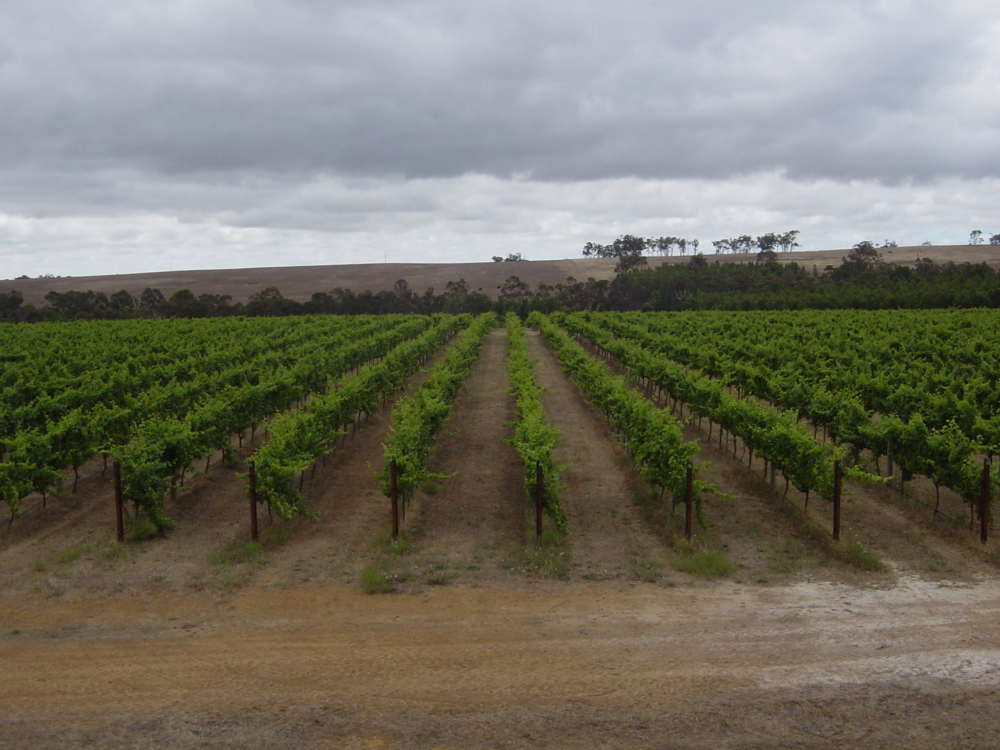
Grosset began by explaining some of the historical background to Riesling’s heritage in Australia, noting its appearance in South Australia’s Eden Valley in the 1840s and in the more inland Clare Valley in the 1850s. Fortunately, unlike in Victoria and New South Wales, phylloxera has not reared its ugly head in South Australia. Thus, Clare Riesling is planted on its own rootstocks with availability of good clones adding to the mix.
What enables Riesling to grow at all in the relatively tough continental climate of the Clare is its planting at higher elevation, often up to 500 m above sea level. Grosset also differentiated between the soils of the Watervale and Polish Hill sub-regions of Clare Valley, which provide distinctive expressions of Riesling.
Watervale features red loam over limestone in soft rock where vine roots can establish themselves deep down (and can thus cope with drought especially well). Polish Hill, meanwhile, from which Grosset’s top Riesling emanates, comprises shale, clay marl over slate and a generally smaller root system which requires smaller vines (in a modified ‘ballerina’ trellising system). In Polish Hill, Riesling tends to have smaller bunch sizes, a site-affected rather than clonal phenomenon Grosset explained.
Such differences have a palpable effect on the Riesling wines produced from these sub-regions; with Watervale typically giving more generosity of fruit and a floral dimension and Polish Hill being less fruity, more mineral, austere in youth, but highly capable of ageing.
Critically, Grosset also raised the issue of residual sugar on wines from the Clare. In recent memory, of course, what has put Clare Riesling on the map has been its zesty, lime-driven and entirely dry style. Whilst this has not toppled Aussie consumers’ love for Sauvignon Blanc (especially Marlborough Sauvignon), it has served to set a recognizable style in which individual expressions appear from producers as various as Kilikanoon, O’Leary Walker and Tim Knappstein.
However, as Grosset quite rightly noted of his favoured grape, with a nod to other parts of the world in which Riesling can see residual sugar: ‘There is no reason for the acknowledgement of the variety to be entirely dry.’
Indeed, one of the highlights of this session was the opportunity to taste the 2010 Grosset Off‐Dry Riesling, Clare Valley, a stunning wine with 9.2 g/l sugar. Although the appearance of wines with different degrees of residual sugar may prove challenging for the Clare, no one can doubt the premium quality of Grosset’s example. Moreover, perception of sugar on the palate is very much affected by pH (strength of acidity) and total acidity; so it is not really a question, when assessing perception of sweetness, of merely identifying sugar in grammes per litre.
Not that this was solely a discussion of the Clare Valley and its future either. Tasmania, with its cool, essentially maritime, climate is already an impressive source of Rieslings made in dry and often off-dry styles (of which the 2003 Craigow Riesling, Tasmania was a fantastic example). Victoria’s Henty and Western Australia’s Great Southern, meanwhile, are also exciting regions in which Riesling makes stunning wines, every bit as ageable and attractive as those of the Clare.
Finally, the virtues of screw-cap for the ageing of Riesling were also abundantly shown in the example of the 1980 Pewsey Vale Rhine Riesling, Eden Valley, which was in beautiful condition.
The pick of the wines here: 1984 Grosset Polish Hill Riesling, Clare Valley, 1973 Leo Buring DWC15 Riesling, Clare Valley, 1980 Pewsey Vale Rhine Riesling, Eden Valley, 2003 Craigow Riesling, Tasmania, 2010 Grosset Off‐Dry Riesling, Clare Valley
Editor’s note: This is an ongoing 13-part series of Edward Ragg’s account of Australia’s 2010 Landmark Tutorial. Each week, Edward will give us an insider’s view of the program. Join us next week for the Pinot Noir session.
Photo: Sarah Ahmed & Jeffrey Grosset | credit: Edward Ragg



Hi Webmaster! Check out this awesome wordpress plugin for your site! I use it for all my sites. http://bit.ly/pXO80v
I’d should test with you here. Which is not something I usually do! I take pleasure in reading a put up that may make people think. Additionally, thanks for allowing me to remark!