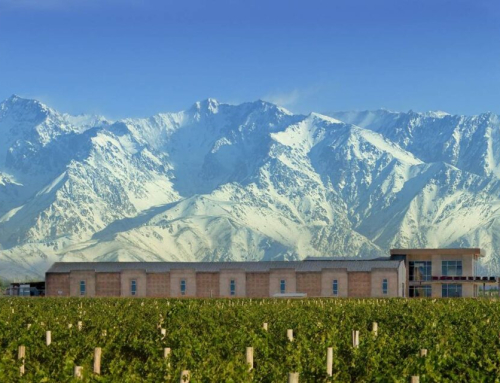
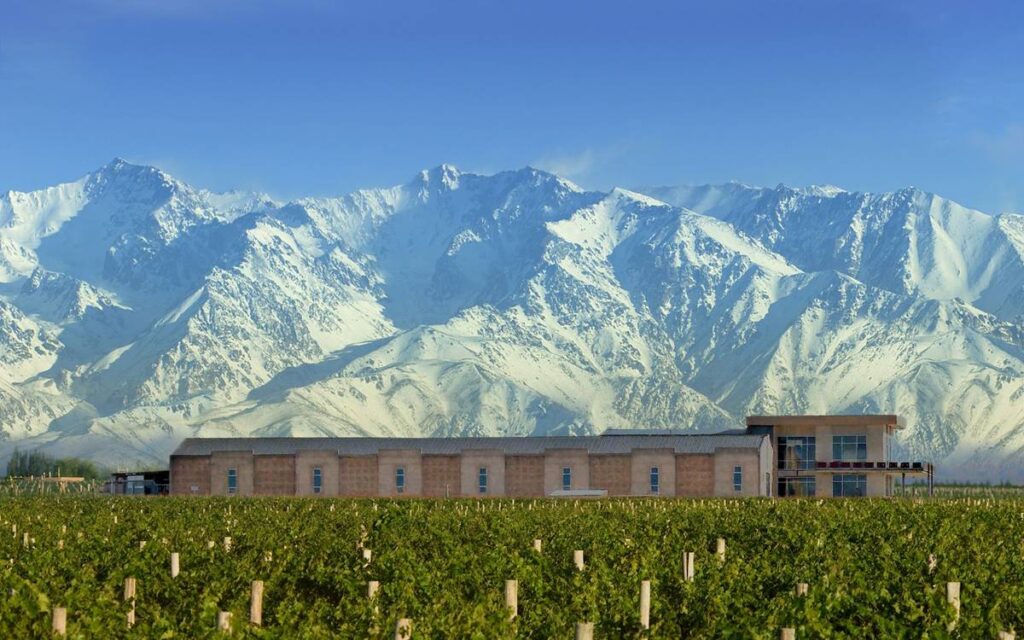
From the high stones of Paraje Altamira to the warm, sunbaked flats of Maipú, a new wave of Malbec reminds us why the Andes changed everything.
It was not so long ago that Malbec was regarded in France as a workhorse grape, useful for adding muscle to a Bordeaux blend, appreciated in Cahors for its inky darkness, but rarely celebrated on its own terms. Then Argentina got hold of it, transplanted it to the foothills of the Andes, and the grape apparently decided it had been living in the wrong country all along.
Argentina is the largest wine producer in South America and the fifth-largest globally, and the evidence continues to mount how delicious the wines are from this region. On a recent afternoon spent with four bottles from two Mendoza estates, the venerable Familia Zuccardi and their sibling label Santa Julia, it became clear that what is happening in Argentina’s wine country is not a passing trend but a full-blown reckoning with terroir, altitude, and the quiet revolution of minimal intervention.
Zuccardi needs no introduction among serious wine drinkers. Sebastián Zuccardi, the third generation of his family to tend these remarkable vineyards, has become something of an evangelist for site-specific expression, and his Polígonos series is the sermon. Each wine in the range carries the name of its village, its soils, its history. This is not marketing. You can taste the philosophy.
ZUCCARDI MALBEC POLÍGONOS PARAJE ALTAMIRA 2022 ($35)
Paraje Altamira sits on the alluvial fan of the Tunuúyán River, somewhere between 1,050 and 1,150 meters above sea level, where the soils are a maze of stones and gravel sheeted in calcium carbonate. The wine that comes from this place is not soft or immediately ingratiating. It asks something of you. The 2022 opens with a deep, bruised-ruby color that approaches violet at the rim, and the nose brings red fruits, both raspberry and plum, along with dried herbs, graphite, and something almost saline, like a sea breeze at altitude. On the palate, it is fresh and precise, with a firm chalky texture that reflects those calcareous soils without apology. Fermented with native yeasts and aged entirely in concrete, no wood, no cosmetics…this is a wine of austere honesty. The tannins are fine but present, like small needles, and the finish is long and mineral. It will be a better bottle in two years than it is today, though today is already quite good. 93 points.
Food Pairings: A rack of lamb with herbed crust would be the obvious choice. A Provençal daube, slowly braised, would do equally well. Or simply a properly aged Manchego and a good afternoon.
ZUCCARDI ‘Q’ MALBEC VALLE DE UCO 2023 ($22)
If the Polígonos is the professor, then the Zuccardi Q is the gifted student who has absorbed every lesson and found something of his own to say. The Q, for “quality,” marked in the vineyard by workers who identified the exceptional blocks, draws from Altamira and Los Chacayes, blending their distinct characters into something rounder and more immediately generous, without sacrificing the identity that makes Uco Valley Malbec so compelling.
The 2023 Q arrives in deep purple, almost brooding, and the nose delivers in waves: blueberries and dark plums, warm stone, violet, a suggestion of iodine and sea shells that is peculiar to high-altitude Malbec and quite unlike anything produced at lower elevations. On the palate, it is medium to full-bodied, with the chalky freshness one expects from these soils and a sappy, juicy acidity that prevents the wine from ever feeling heavy. The tannins are tight, grained, and focused. The 2023 is fermented in concrete with minimal intervention, and one senses throughout the glass that Sebastián Zuccardi’s insistence on letting the vineyard speak. There is a sense of mountain here: clean air, hard rock, cold nights. 90 points.
Food Pairings: Grilled skirt steak with chimichurri is a classic pairing and deservedly so. A roasted leg of lamb with garlic and rosemary would be equally at home. The wine’s natural acidity also makes it a fine companion for hard aged cheeses, a well-matured Pecorino or aged Gouda.
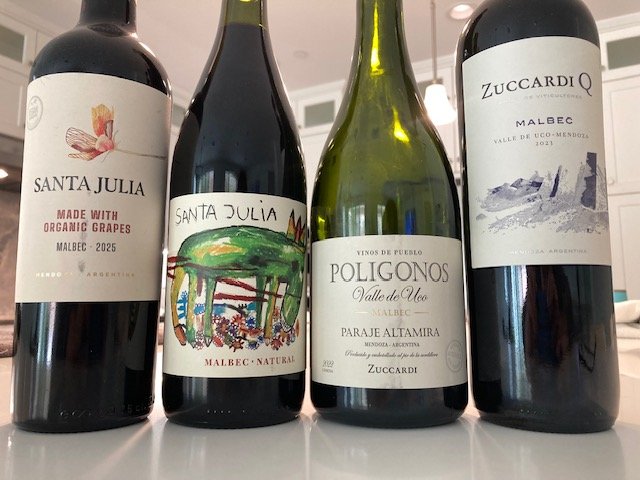
SANTA JULIA MALBEC NATURAL, MAIPÚ, MENDOZA 2025 ($12)
Santa Julia is the Zuccardi family’s other estate, the one that reaches further into organic farming and what the wine world has taken to calling “natural” winemaking, a term that means everything and nothing depending on who is using it, but that in Santa Julia’s case appears to mean genuinely minimal intervention and a commitment to the organic vineyards of Maipú, the warmer, lower-altitude zone east of the city of Mendoza. The wines are less severe, more immediately pleasurable, and unapologetically fun.
The 2025 vintage of Santa Julia’s Natural Malbec produced from certified organic vineyards, with no added sulfites and minimal cellar manipulation is a minor revelation. It is the kind of wine that reminds you why people started drinking red wine in the first place. The color is deep and inky, with a violet fluorescence at the edge. The nose is pure and direct: black and purple fruit, violets, a hint of hot stones and crushed rock that keeps it from being merely fruity. On the palate, it is juicy and medium to full-bodied, with natural acidity that lifts everything and firm but fine tannins that provide just enough structure to remind you this is a serious grape variety. Lovely. 88 points.
Food Pairings: This wine was born for the Argentine asado, a wood-fired grill, short ribs, sausages, the whole spectacle. But it is equally at home with a good pizza from a proper oven, a hamburger from fresh-ground beef, or a plate of roasted mushrooms for those who prefer their protein in other forms.
SANTA JULIA MALBEC EL BURRO, MAIPÚ, MENDOZA 2024 ($18)
El Burro, “The Donkey,” was Santa Julia’s first foray into the natural wine category, and it has become something of a cult favorite among the kind of wine drinkers who distrust convention and are suspicious of anything that has spent too long in a new oak barrel. The name is apt: this wine is direct, unpretentious, and surprisingly sturdy. The 2024 offers an inky purple hue and a nose of dark cherries, violets, a curl of hot stone, and a whisper of oyster sauce, that particular marine note that one associates with cool, mineral-rich soils. On the palate, it is vivid and fruit-forward, with juicy natural acidity and tannins that are present but polished. It is not a complicated wine, and it does not aspire to be. From organically grown grapes in Maipú, no sulfites added, fermented with minimal intervention, the 2024 El Burro delivers exactly what it promises: pure fruit, crunchy freshness, and a flavorful finish that makes you want another glass before the first one is finished. 90 points.
Food Pairings: Thin-crust pizza with good tomato and fresh mozzarella. Grilled chorizo. A charcuterie board that leans toward the rustic. This wine does not require a tablecloth or a reservation. Open it on a Tuesday with whatever is in the refrigerator, and it will be exactly right.
What connects these four wines, beyond geography and grape variety, is a shared conviction that the vineyard matters more than the winemaker’s ego. Zuccardi demonstrates this at the highest level, with wines of genuine intellectual interest. Santa Julia demonstrates it in a more approachable register, with wines that invite rather than demand. Both are worth your time and money. Both are honest.
Argentina took Malbec from obscurity and gave it a home. After tasting these bottles, one suspects the grape is grateful.