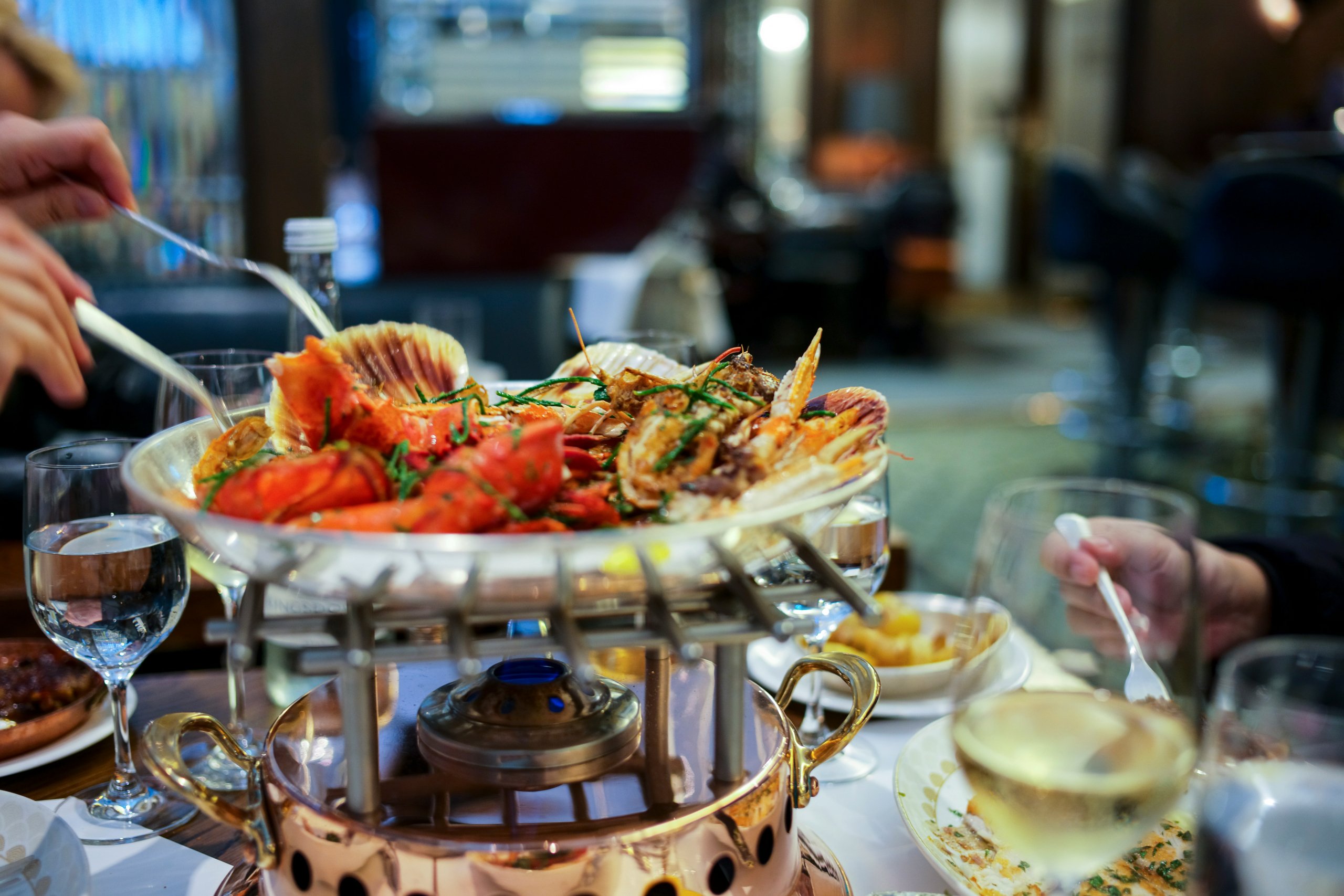
The Feast of the Seven Fishes—the Italian-American Christmas Eve tradition of serving multiple seafood courses—presents a unique wine pairing challenge. You’re not dealing with a single protein and a couple of sides. You’re facing seven (or more, because Italians hate doing anything small) completely different seafood preparations, from delicate raw oysters to spicy tomato-based seafood stews, all of which theoretically need different wines.
The traditional approach would be to open seven different bottles, one for each course, which sounds sophisticated until you realize you’re opening and abandoning half-empty bottles all evening while everyone gets progressively drunker. A better strategy is to find two or three versatile wines that work with most of what’s on the table and accept that perfection is impossible.
Understanding the Challenge
The Feast of the Seven Fishes isn’t one meal—it’s a progression of different preparations that can include raw seafood, fried dishes, seafood in tomato sauce, seafood in white wine sauce, baked fish, and everything in between. Some dishes are delicate and subtle, others are bold and garlicky. You might have anchovies on toast followed by lobster fra diavolo followed by salt cod in tomato sauce.
The default assumption is that seafood equals white wine, which is mostly true but not absolute. Some seafood preparations, particularly those with rich tomato sauces or meaty fish like tuna, actually work better with light-bodied reds. The key is understanding which wines have the versatility to handle multiple courses rather than optimizing for each individual dish.
Verdicchio: The MVP
Verdicchio from the Marche region is a crisp but complex wine with fresh citrus and enough subtle fruit to complement the sweetness of shrimp and other seafood. It’s similar to a fruitier, citrus-forward Sauvignon Blanc but with more bite, and it’s the wine I’d choose if I could only open one bottle for the entire feast.
Verdicchio works with raw seafood, handles acidic tomato sauces, cuts through fried dishes, and doesn’t get overwhelmed by garlic or spices. It’s high in acidity, which is essential for seafood, but it has enough body that it doesn’t taste thin next to richer preparations. Most importantly, it’s distinctly Italian, which feels appropriate for this very Italian-American tradition.
A good Verdicchio costs fifteen to twenty-five dollars, and you’ll want at least two bottles for a table of six to eight people. Look for producers like Sartarelli or Garofoli. The wine should be served very cold—colder than you’d typically serve white wine—to maximize its refreshing qualities.
Orvieto: For Bolder Preparations
Orvieto, the star of Umbrian white wine, is a blend of Malvasia, Grechetto, and other native grapes that brings both weight and salinity to seafood pairings. The Malvasia gives the wine needed weight to stand up to sauce and heat, while the Grechetto brings salinity and acidity.
This is the wine for baccalà (salt cod) in tomato sauce, for seafood stews, for anything with olives or capers. It’s more substantial than Verdicchio, which means it won’t get lost when you’re dealing with strong flavors. But it’s still recognizably a white wine meant for seafood rather than something trying to be Chardonnay.
Orvieto is also remarkably affordable—good bottles cost twelve to twenty dollars. Buy the classico designation if you can find it, which indicates wine from the historic center of the production zone and generally means better quality.
When to Consider Red Wine
Red wines with natural sappiness, low tannin, and no overt oak can work with pasta dishes, stews, and braised seafood in rich tomato-based sauces, as well as with meaty fish like tuna. The first wave of Italian immigrants drank red wine with everything, and Italian-American families still typically serve some red with this dinner.
Sicilian reds are particularly well-suited to seafood in tomato sauce. Frappato is light-bodied with bright cherry fruit and low tannins, making it one of the few reds that doesn’t overwhelm fish. Cerasuolo di Vittoria, a blend of Frappato and Nero d’Avola, has slightly more structure while maintaining the fresh, juicy character that works with seafood.
Etna Rosso, made from Nerello Mascalese grown on the volcanic slopes of Mount Etna, is another excellent choice. It has this wonderful savory quality and mineral backbone that complements seafood better than most reds. The wines are elegant rather than powerful, which is exactly what you need when pairing red wine with fish.
Chianti—particularly younger, fresher styles like Chianti Rufina—also works surprisingly well. Look for wines without heavy oak aging that emphasize the bright cherry and herb notes of Sangiovese. Avoid Chianti Classico Riserva or other aged styles, which have too much tannin and oak for seafood.
Sparkling Wine as a Strategy
If you want to avoid the red versus white debate entirely, serve sparkling wine throughout the meal. Italian Prosecco or Franciacorta (Italy’s answer to Champagne) feels appropriate for an Italian feast, and the bubbles and acidity work with everything from raw oysters to fried calamari.
The advantage of sparkling wine is that it resets your palate between courses, which matters when you’re eating seven different seafood preparations. Still wine can start to taste flat or heavy after multiple courses, but sparkling wine maintains its freshness. It also feels festive, which matches the celebratory nature of the feast.
Prosecco from Valdobbiadene or Conegliano is widely available and affordable—fifteen to twenty-five dollars for good bottles. Franciacorta is more expensive (thirty to sixty dollars) but genuinely rivals Champagne in quality. Either works beautifully with the feast, and you can’t go wrong by opening both and letting people choose.
Course-by-Course Strategy
Course-by-Course Wine Pairing
The Feast of the Seven Fishes
3 bottles of Verdicchio ($15-25 each) — Your primary wine for most courses
2 bottles of Prosecco ($15-25 each) — Open first, continue throughout for those who prefer bubbles
1 bottle of Sicilian Red ($20-30) — Frappato or Cerasuolo di Vittoria for tomato-based dishes
Temperature Tip: Serve white wines very cold (45°F or colder). Slightly chill red wines (60°F). Keep extra bottles ready in the refrigerator.
Raw and marinated seafood (oysters, crudo, marinated anchovies): Serve the brightest, most acidic white wine here. Verdicchio, Albariño, or even Muscadet all work. The high acidity complements the brininess of raw seafood.
Fried seafood (calamari, smelts, baccalà fritters): Sparkling wine is ideal because the bubbles cut through the oil. If you’re serving still wine, make sure it’s very cold and has plenty of acidity to balance the richness.
Seafood in white wine sauce (clams, mussels, shrimp scampi): This is where Verdicchio or Orvieto shines. The wine mirrors the flavors in the dish while adding freshness.
Seafood in tomato sauce (lobster fra diavolo, fish in marinara, calamari in red sauce): Orvieto works, but this is also where you can successfully introduce light-bodied red wine. Sicilian reds or young Chianti won’t fight with the acidity and garlic.
Baked or roasted whole fish (branzino, sea bass): Fuller-bodied white wines work best here. Verdicchio is still good, but you could also serve white Burgundy, richer Soave, or even Chardonnay if it’s not heavily oaked.
Meaty fish (tuna, swordfish): Light-bodied red wines like Pinot Noir or Sicilian reds are appropriate here. The fish has enough flavor and texture to handle red wine that would overwhelm more delicate seafood.
The Practical Reality
Here’s what I actually do for a Feast of the Seven Fishes: I buy three bottles of Verdicchio, two bottles of Prosecco, and one bottle of Sicilian red (usually Frappato or Cerasuolo di Vittoria). The Prosecco gets opened first and continues throughout the meal for people who want it. The Verdicchio is the primary wine for most courses. The red gets opened midway through when we hit the heavier, tomato-based dishes.
This strategy costs roughly one hundred to one hundred fifty dollars for six to eight people, which is reasonable for a multi-hour feast. More importantly, it means I’m not constantly opening new bottles or worrying about whether I’m serving the optimal pairing. The wines are all appropriate, none of them clash with anything, and most importantly, they’re all Italian and feel right for the occasion.
Temperature Matters More Than You Think
Serve white wines colder than you normally would—forty-five degrees or even colder. The feast lasts several hours, and wines will warm up in the glass. Starting very cold ensures they stay refreshing throughout multiple courses.
Red wines should also be slightly chilled—maybe sixty degrees, which is cooler than room temperature. This maintains their freshness and prevents them from tasting heavy or alcoholic next to seafood. Put red wine in the refrigerator for twenty to thirty minutes before serving.
Keep extra bottles chilled and ready. Once you open the second bottle of Verdicchio, pull a third from the refrigerator so it’s ready when you need it. Running out of wine or serving warm wine will ruin the experience faster than any pairing mistake.
What About Beer?
Many Italian-American families serve beer alongside wine at the Feast of the Seven Fishes, and honestly, this makes a lot of sense. Light lagers or Italian Pilsners like Peroni or Moretti work beautifully with fried seafood and don’t require the same careful consideration as wine.
If you’re serving both wine and beer, buy less of each but make sure you have both options available throughout the meal. Some people will stick with one, others will switch back and forth depending on what they’re eating. This is a practical solution that reduces wine stress while still maintaining the Italian character of the feast.
Not sure how much beer and wine to buy? Check out our WINE CALCULATOR here.
The Real Goal
The wine at the Feast of the Seven Fishes should enhance the experience without becoming the focus. You’re celebrating Italian-American heritage, gathering with family and friends, and eating an unreasonable amount of seafood. The wine is there to refresh your palate, complement the food, and contribute to the festive atmosphere.
Perfect pairings are nice but unnecessary. Appropriate wines served properly are more than sufficient. Buy good bottles that feel right for the occasion, make sure you have enough of them, keep them cold, and focus your attention on the food and the people rather than whether your wine choice is optimal. That’s the real spirit of the feast—abundance, tradition, and the joy of being together.