

The cheese board has become the default entertaining move for the holidays, which makes sense. It requires minimal cooking, looks impressive, and gives people something to do with their hands during that awkward first hour of a party. But the wine pairing question trips people up. You’ve assembled four or five cheeses ranging from mild to pungent, and now you need to figure out what to pour that won’t clash with at least one of them.
Here’s the uncomfortable truth: there is no single wine that pairs perfectly with every cheese on a typical board. What works with creamy brie will overwhelm delicate goat cheese, and what complements aged cheddar will taste wrong with blue cheese. You’re not aiming for perfection. You’re aiming for wines that don’t actively fight with anything and ideally enhance most of what’s on the board.
Why White Wine Actually Makes Sense
Most people instinctively reach for red wine with cheese because it feels more substantial and holiday-appropriate. This is a mistake. White wine can work with cheddar and other hard British territorial cheeses, while goats cheese and sauvignon blanc is a particularly successful combination.
The acidity in white wine cuts through the richness of cheese in a way that red wine’s tannins cannot. Tannins, which give red wine structure and that drying sensation in your mouth, can clash with the salt and fat in cheese, making both the wine and the cheese taste worse. White wine’s fruit flavors (think orchard fruits like apples and pears) naturally complement cheese in the same way that serving fruit alongside cheese makes sense.
Sauvignon Blanc is my go-to white for cheese boards because it has enough acidity to handle rich, creamy cheeses while its herbal notes work surprisingly well with aged cheeses. It’s particularly good with goat cheese, but it won’t embarrass itself with cheddar or Gruyère either. Buy something from the Loire Valley in France or from New Zealand—both have the crispness and intensity you want.
For richer, creamier cheeses like brie or camembert, try an unoaked Chardonnay or a Chenin Blanc. These wines have more body than Sauvignon Blanc, which helps them stand up to the butterfat without being overwhelmed. Sparkling wines with high acidity pair well with soft, creamy cheeses, as the wine’s bright acidity cuts through all that cream.
The Red Wine That Works
Soft, ripe, and mellow red wines without powerful angular tannins work better with stronger cheeses, with Rioja being a reliable choice. Young, fruity reds also work. Think Beaujolais, lighter Pinot Noir, or unoaked reds from Spain like Garnacha.
The key is avoiding wines with aggressive tannins or heavy oak. Big Cabernet Sauvignon, Barolo, or anything described as “powerful” or “structured” will make most cheeses taste metallic or bitter. You want reds that are fruit-forward and easygoing, wines that won’t dominate the cheese or require you to think too hard about whether they’re working together.
Pinot Noir is probably the safest red wine choice for a cheese board because it has enough complexity to be interesting but not so much power that it overwhelms anything. It works particularly well with semi-hard cheeses like Gouda, Swiss, or Havarti. Oregon or California Pinot Noir in the twenty-five to forty dollar range will do the job beautifully.
If you’re serving blue cheese, and you should, because it’s delicious and makes the board look more impressive, you need something that can handle the intensity. This is where slightly sweet wines come in. Sauternes, late-harvest Riesling, or Port all work with blue cheese because the sweetness balances the saltiness and the wine’s richness matches the cheese’s pungency. But these are dessert wines, so don’t open them at the beginning of the party unless you’re okay with everyone getting too full to eat dinner.
Sparkling Wine as the Universal Solution
Here’s my actual recommendation: serve sparkling wine with your cheese board and stop worrying about perfect pairings. Sparkling wine, rosé, and Riesling pair well with the saltiness of fresh cheeses, with the salt bringing out the fruitiness and balancing the acidity.
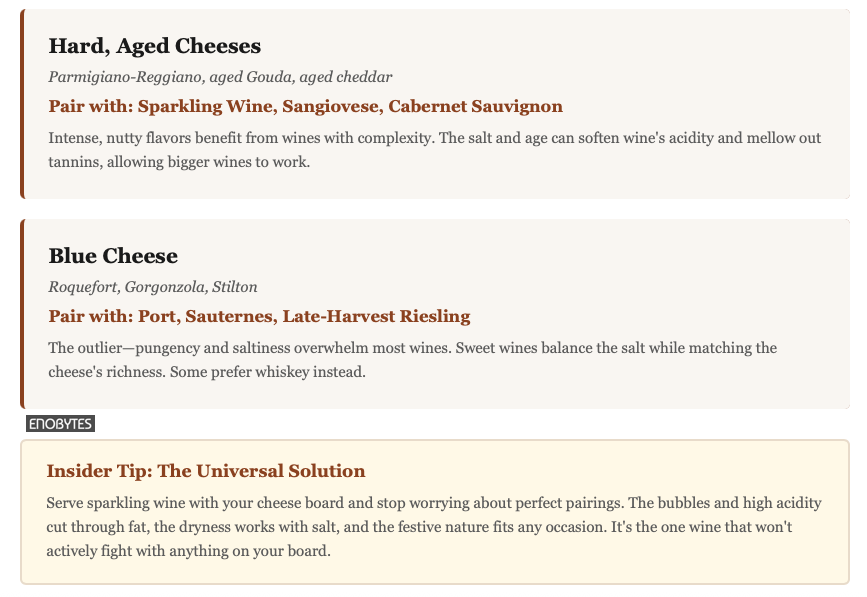
The bubbles and high acidity in sparkling wine cut through fat, the dryness works with salt, and the festive nature fits the holiday season. Champagne, Prosecco, Cava, or good American sparkling wine all work. You’re not overthinking it, you’re not worrying about tannins, and everyone feels like they’re celebrating even if it’s just Tuesday.
Buy enough that people can drink it throughout the evening rather than treating it as a single glass before switching to still wine. For a party of ten, I’d have at least four bottles of sparkling wine available, and I’d consider making it the only wine option rather than one of several choices.
Matching Specific Cheeses
If you want to get more precise about pairings, here’s what actually works based on cheese type:
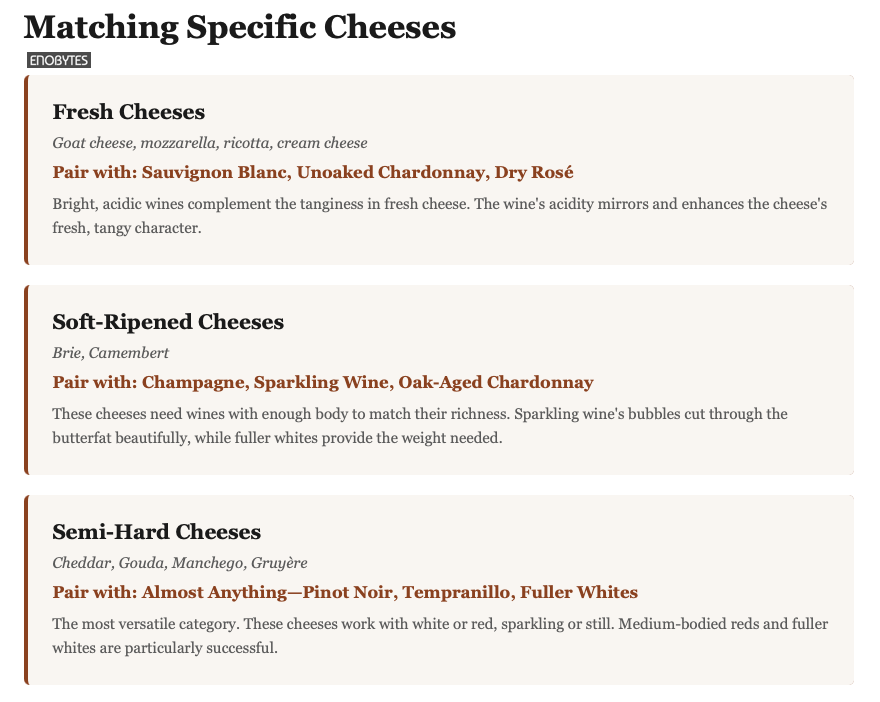
Fresh cheeses (goat cheese, mozzarella, ricotta, cream cheese) pair with bright, acidic wines. Sauvignon Blanc, unoaked Chardonnay, or dry rosé all work. The wine’s acidity complements the tanginess in the cheese.
Soft-ripened cheeses (brie, camembert) need wines with enough body to match their richness. Champagne or sparkling wine is ideal, but full-bodied white wines like oak-aged Chardonnay also work. Avoid light, crisp whites that will taste thin next to the creamy cheese.
Semi-hard cheeses (cheddar, Gouda, Manchego, Gruyère) are the most versatile. They pair with almost anything—white or red, sparkling or still. Medium-bodied reds like Pinot Noir or Tempranillo work well, as do fuller-bodied whites. This is where you have the most flexibility.
Hard, aged cheeses (Parmigiano-Reggiano, aged Gouda, aged cheddar) have intense, nutty flavors that benefit from wines with some complexity. Aged cheeses can handle bigger wines—try fuller-bodied reds or richer whites. Sparkling wine, Sangiovese and Cabernet Sauvignon work well with hard cheeses with salty, sharp and nutty flavors, as the salt and age can soften wine’s acidity and mellow out tannins.
Blue cheese (Roquefort, Gorgonzola, Stilton) is the outlier. The pungency and saltiness overwhelm most wines. Your best options are sweet wines (Port, Sauternes, late-harvest Riesling) or rich, fruity reds without much tannin. Some people swear by pairing blue cheese with whiskey instead of wine, which honestly makes more sense than most wine pairings.
The Practical Strategy
For a typical holiday cheese board with four or five varied cheeses, buy two bottles of wine: one sparkling and one light-bodied red. The sparkling wine will work with everything, and the red will appeal to people who don’t want bubbles. This covers your bases without requiring a wine degree or five different open bottles.
If you’re only buying one wine, make it sparkling. If you’re buying three wines, add a crisp white like Sauvignon Blanc. Beyond that, you’re overthinking it and spending money that would be better used on better cheese.
What to Actually Put on the Board
The wine matters less than what surrounds the cheese. Include crackers, bread, fresh fruit (grapes, apples, pears), dried fruit (figs, apricots), nuts (almonds, walnuts), and something sweet like honey or jam. These components help bridge the gap between different cheeses and give people options for adjusting flavors.
Fresh fruit, particularly apples and pears, pairs with the same wines that pair with cheese, which makes the whole experience more cohesive. Honey drizzled on aged cheese is spectacular, and it works with both sweet and dry wines. Nuts add texture and fat that complements wine in ways cheese alone doesn’t.
The point is that you’re creating an ecosystem of flavors where nothing has to be perfect because everything works together reasonably well. The cheese is the star, the wine is supporting, and the accompaniments smooth over any rough edges in the pairings.
How Much Wine to Buy
For gatherings lasting three hours or more, plan on one bottle of wine per person, as guests typically drink two glasses in the first hour and one glass per hour afterward. This sounds like a lot, but cheese boards tend to encourage lingering and grazing, which means more drinking.
If you want more guidance on how many bottles based on length of event and number of people, use our Wine Calculator!
For a cheese board party specifically, people will drink more than at a sit-down dinner because they’re standing, talking, and continuously snacking. The food never really stops, so the wine consumption stays steady throughout the evening. Better to have extras than to run out while people are still eating cheese.
What Actually Matters
The anxiety about wine and cheese pairing is mostly unnecessary. Unless you’re serving a single-cheese course at a formal dinner, nobody is paying that much attention to whether your wine choice is optimal. They’re eating cheese, drinking wine, and talking to people they haven’t seen in a while.
Choose wines you like that aren’t too tannic or too oaky, make sure you have enough of them, and serve everything at the right temperature. White and sparkling wines need to be properly cold, red wines should be slightly cooler than room temperature. Beyond that, the quality of your cheese and the atmosphere of your party matter more than whether you’ve achieved perfect pairings.
The best cheese board is the one people actually enjoy, and the best wine is whatever keeps people happy and prevents them from leaving early. Serve sparkling wine, buy good cheese, and stop stressing about the details.





Leave A Comment