In Spain’s misty northwest corner, where the Atlantic crashes against granite cliffs and Celtic traditions persist in a language older than Spanish itself, lies a wine region that defies every expectation you have about Spanish wine. Rías Baixas, pronounced “REE-ahs BY-shahs” is green and wet, more reminiscent of Ireland than Andalusia. There are no Rioja-style reds here, no barrel-aged Tempranillos. Instead, there’s Albariño: a white grape producing wines so crisp, so aromatic, so perfectly matched to the region’s extraordinary seafood that you’ll wonder why you ever bothered with Sauvignon Blanc.
I spent a week exploring this region, driving through fog-shrouded valleys dotted with stone manor houses, eating percebes (gooseneck barnacles) pulled from the rocks that morning, and tasting Albariño after Albariño from vines trained on granite pergolas. What struck me wasn’t just the quality of the wines (though they’re exceptional) but the sense of place. Rías Baixas feels like nowhere else in Spain: anciently Celtic, persistently damp, defiantly particular. The wines taste like the sea and the stones and the mist all at once, and that’s exactly the point.

Why Rías Baixas Works: Geography as Destiny
The name “Rías Baixas” translates to “lower estuaries” in Gallego, the local language that blends Portuguese and Spanish with Celtic roots. These rías—finger-like inlets carved by rivers meeting the Atlantic define the region’s character. They bring cool ocean air inland, creating a maritime climate with high humidity (annual rainfall can exceed 1,800mm in some areas), moderate temperatures, and the persistent mists that give Galicia its nickname: “Green Spain.”
This is the antithesis of Mediterranean Spain. Summer temperatures rarely exceed 86°F; winters are mild, rarely dropping to freezing. But it’s the rainfall that matters most. Rías Baixas is one of Europe’s wettest wine regions, which would spell disaster for most grape varieties. Albariño, with its thick skins resistant to rot and mildew, thrives in conditions that would destroy Chardonnay or Pinot Grigio.
The soils are predominantly granite-based, sometimes with schist, with alluvial and colluvial deposits of clay, silt, sand, and gravel left by rivers. Low organic content and high minerality create ideal drainage despite the rain. That granite is crucial as it imparts the distinctive mineral edge that makes Rías Baixas Albariño so food-friendly and age-worthy.
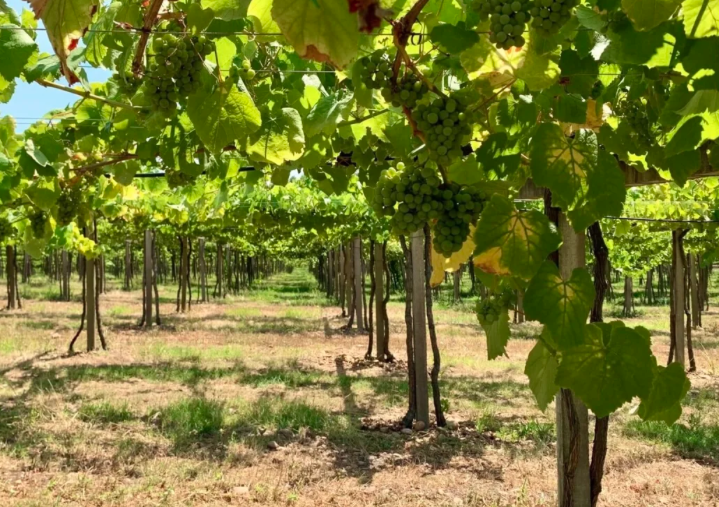
Pergolas raised on granite posts
The traditional training method, pergolas raised on granite posts, serves multiple purposes. Elevating vines off the ground (up to 6 feet high) protects against humidity and mildew while maximizing sun exposure. It’s labor-intensive and precludes mechanization, but it’s perfectly adapted to the climate. Walking under these vine canopies feels like entering a green cathedral, with grape clusters hanging overhead like chandeliers.
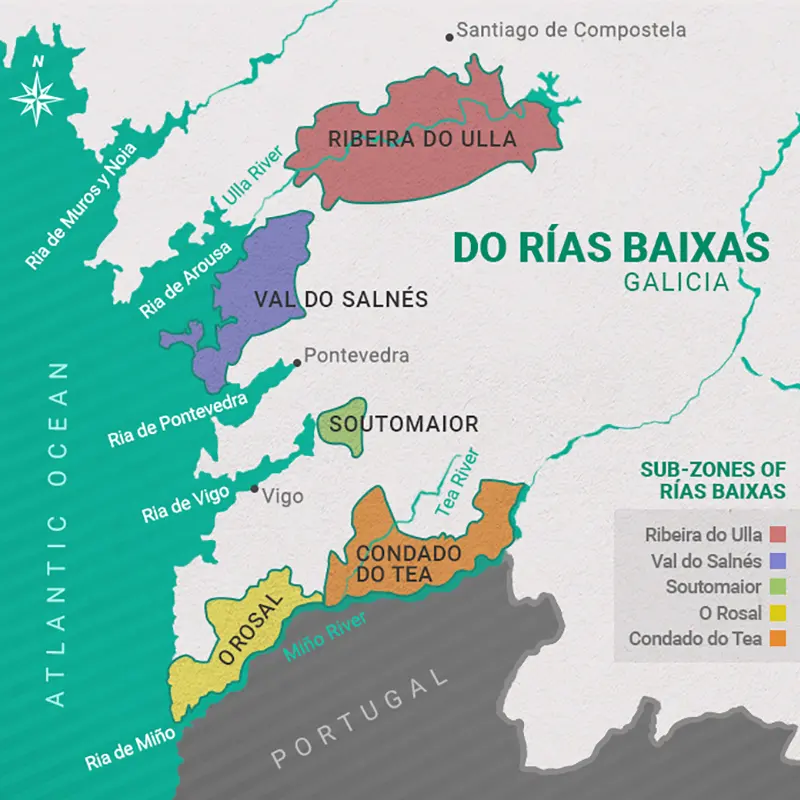
The Five Sub-Regions: Understanding Rías Baixas’s Diversity
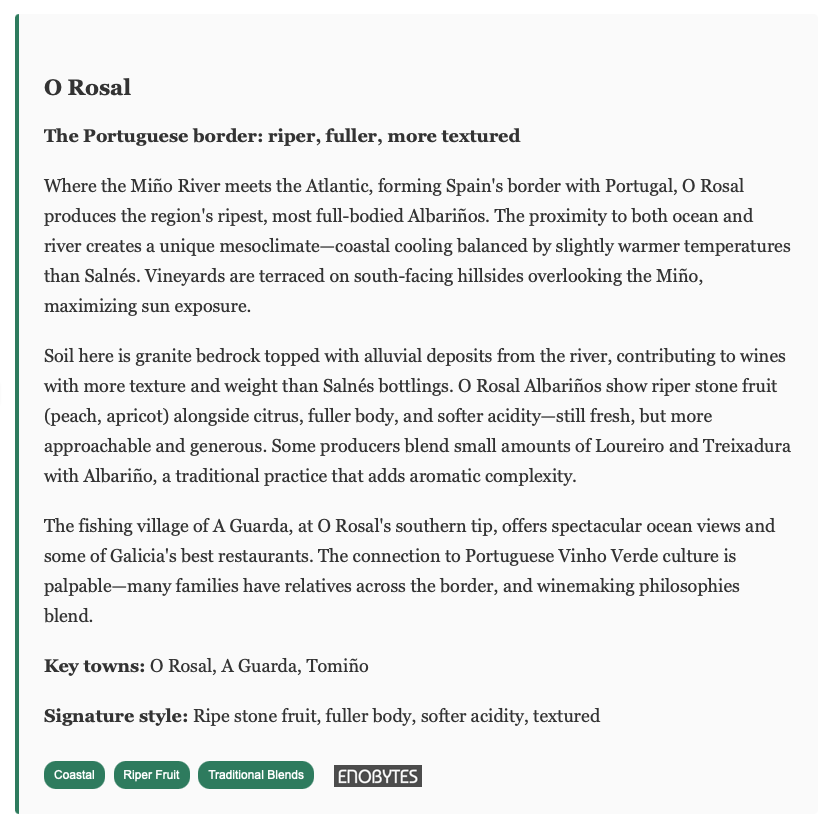
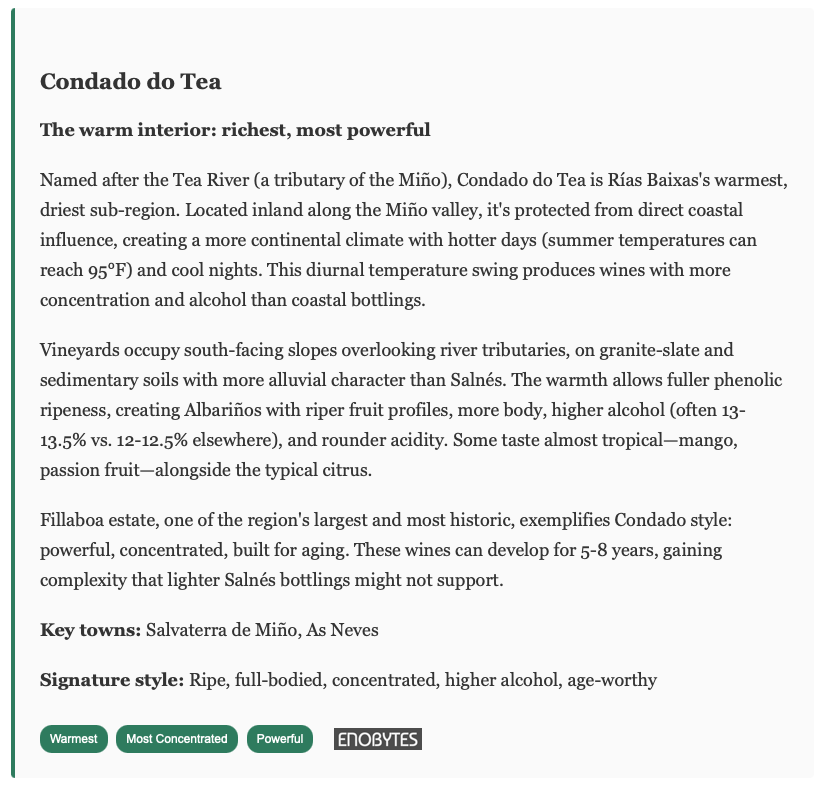
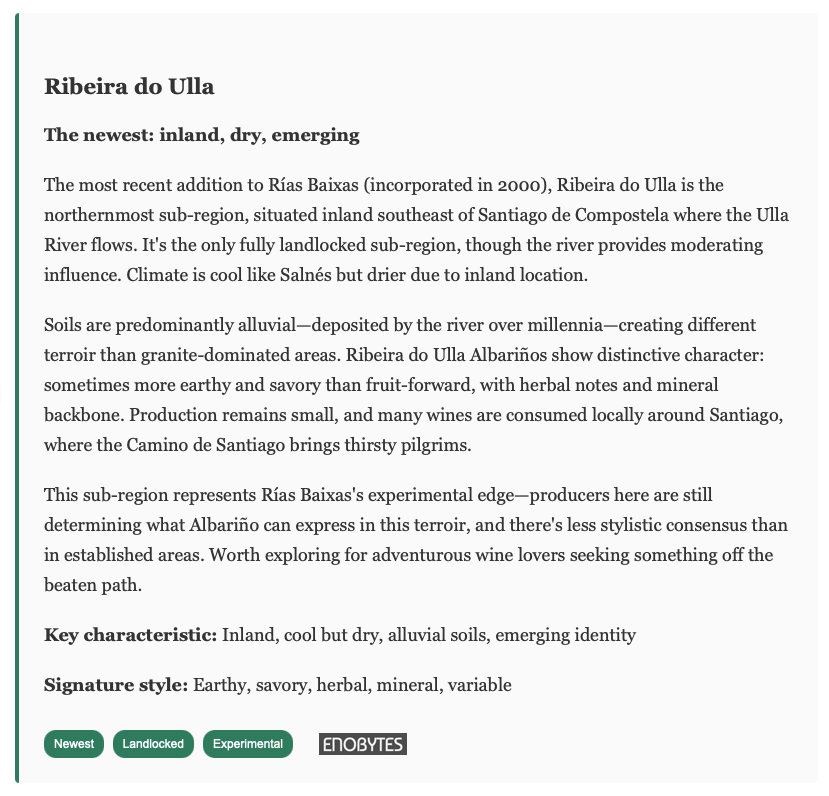
Unlike regions that trumpet terroir differences, Rías Baixas’s five sub-regions share fundamental characteristics: granite soils, Atlantic influence, high rainfall, and Albariño dominance. The variations are more subtle…degrees of coastal proximity, temperature, ripeness, style. But those subtleties matter, especially as producers increasingly label wines by sub-region to emphasize provenance.
The Grape: Albariño and Supporting Cast
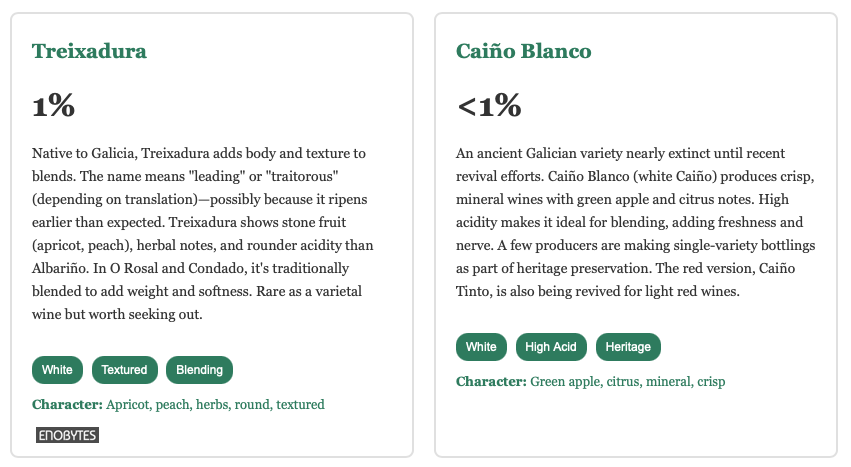
Let’s be clear: Rías Baixas is Albariño country. The grape represents 96% of plantings and defines the region’s identity. But there’s more to the story, and understanding Albariño’s origins, characteristics, and companion varieties matters for appreciating what makes these wines special.
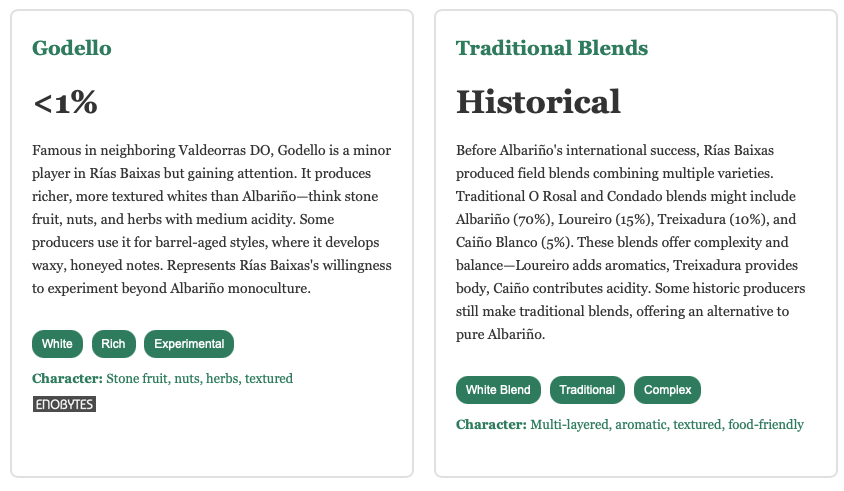
Winemaking Styles: From Classic to Experimental
For decades, Rías Baixas winemaking followed a formula: harvest Albariño, ferment in stainless steel at cool temperatures, bottle young, drink within 2-3 years. This approach showcases the grape’s aromatic intensity and crisp acidity—the style that made Albariño famous. But as the region matures, producers are experimenting with techniques that add complexity and challenge assumptions about what Albariño can be.
Classic Style: Stainless steel fermentation, no oak, no malolactic, bottled with some CO2 for freshness. Sur lie aging (on the lees) for 3-6 months adds texture without oak influence. This remains the dominant style—about 90% of production. The wines show pure fruit, bright acidity, and immediate drinkability. Serve cold (45-50°F) with shellfish, white fish, or tapas.
Barrel-Fermented: A growing category, inspired by white Burgundy. Albariño fermented and aged in French oak (usually older barrels or neutral wood to avoid overwhelming the fruit) develops rounder texture, subtle spice, and greater aging potential. These wines need food—rich fish dishes, poultry, risotto—and can evolve for 5-10 years. Critics initially dismissed the style as un-Galician; now it’s accepted as a legitimate expression for specific terroirs.
Extended Lees Aging: Some producers age Albariño sur lie for 12-24 months, developing creamy texture and complexity without oak. This middle path between classic freshness and barrel weight is gaining popularity. The wines show more depth than standard bottlings but maintain Albariño’s characteristic brightness.
Single Vineyard/Old Vines: As Rías Baixas embraces terroir-driven winemaking, single-vineyard Albariños from old vines (50+ years) are emerging. These wines emphasize place over immediate appeal—more mineral, more structured, requiring patience. They’re often more expensive but show what Albariño can achieve with site specificity and vine maturity.
Sparkling: A tiny but growing category. Traditional-method Albariño sparklers show the grape’s natural acidity and aromatics in a different context. Some producers also make pét-nat (ancestral method) versions—cloudy, fun, unfiltered. These aren’t serious age-worthy wines, but they’re delicious aperitifs.
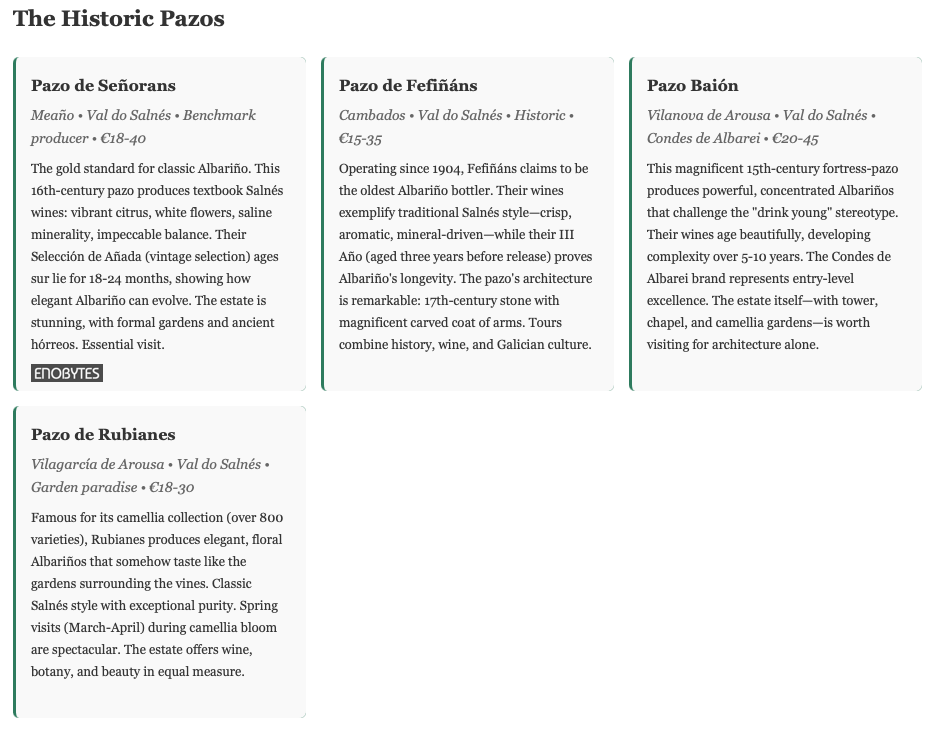
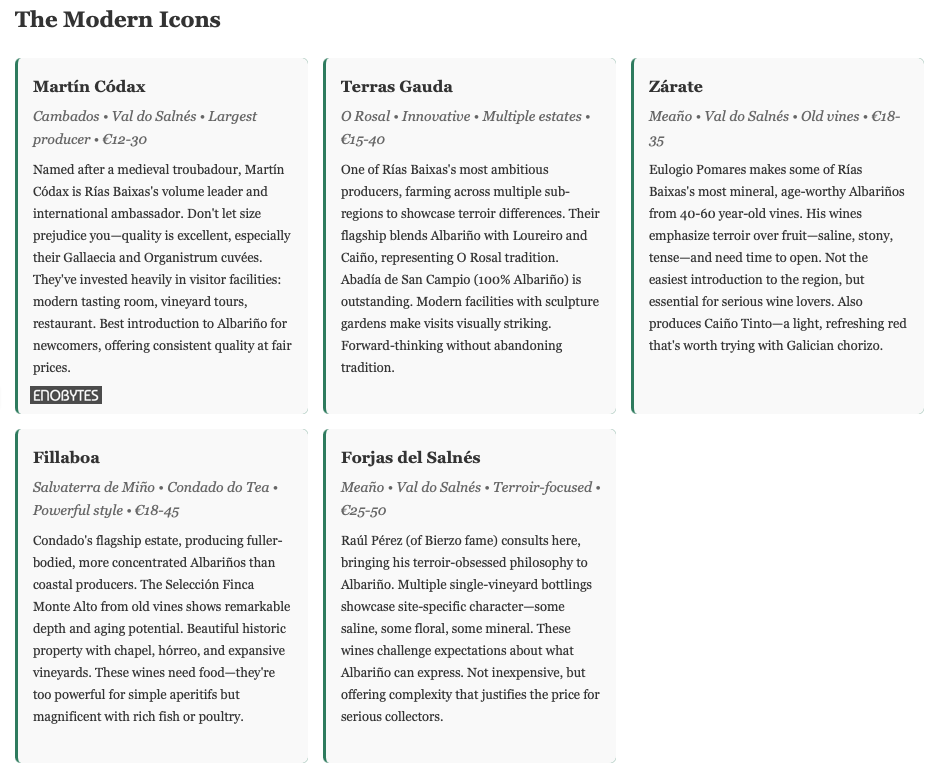
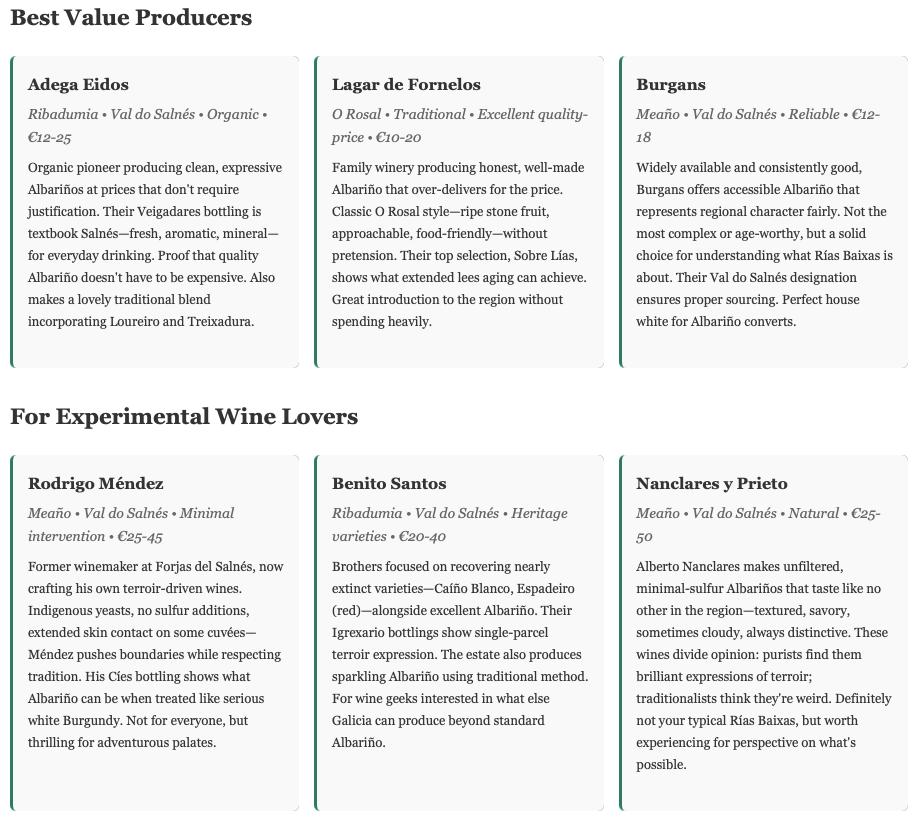
Rías Baixas Top Producers: The Essential List
With 180+ wineries in Rías Baixas, choosing where to visit requires strategy. Quality is generally high. This region doesn’t tolerate mediocrity, but certain producers consistently stand out. I’ve organized them by style and approach to help you prioritize.
Planning Your Visit to Rías Baixas: Practical Matters
Getting there: Santiago de Compostela Airport (SCQ) serves the region, with connections from Madrid, Barcelona, and some European cities. Rent a car at the airport—it’s 30-40 minutes to Val do Salnés. Porto, Portugal (OPO) is 2 hours south and offers more international flights. Trains connect Santiago to Pontevedra and Vigo, but don’t serve wine villages directly. A car is essential for serious wine touring.
Where to stay: Cambados is the wine tourism hub, with several hotels and restaurants. Hotel Spa Norat O Grove offers modern comfort on the peninsula. For luxury, stay at a pazo-turned-hotel like Pazo de Soutomaior or Casa Grande de Fuentemayor. Santiago de Compostela (40 minutes from Salnés) offers more dining and cultural options, plus the magnificent cathedral. Coastal towns like Sanxenxo provide beach access but limited wine proximity.
Best time to visit: Late spring (May-June) offers comfortable temperatures, wildflowers, and fewer crowds. Summer (July-August) is peak season—busy beaches, full restaurants, higher prices…but equally busy when Galicia’s famous festivals happen. Autumn (September-October) brings harvest and dramatic Atlantic storms. Winter (November-March) is quiet, often rainy, but authentic—you’ll have wineries to yourself.
Book ahead: Major producers require reservations, especially May-September. Small family wineries may be more flexible but appreciate advance notice. Tours typically cost €10-25, often including 3-4 wines plus vineyard walk. Pazo visits sometimes include the historic house and gardens. English is increasingly common at larger estates; Spanish helps at smaller operations.
What to eat: This is Spain’s seafood paradise. Essential dishes: pulpo á feira (boiled octopus with paprika and olive oil), empanada gallega (savory pie, usually filled with tuna or cockles), percebes (gooseneck barnacles—expensive but extraordinary), vieiras (scallops, often grilled in their shells), lacón con grelos (pork shoulder with turnip greens), and any shellfish you can identify. Pair everything with Albariño—the wine was literally designed for this food.
Language: Gallego (Galician) is the first language, though Spanish is universally spoken. Gallego is closer to Portuguese than Spanish—if you speak Portuguese, you’ll understand much of it. English is common at tourist-facing businesses. Key wine terms: adega (winery/cellar), viño (wine), branco (white), colleita (vintage/harvest).
Costs: Rías Baixas is more affordable than Rioja or Priorat. Wine: €12-40 for most bottles (cult single-vineyards reach €50+). Meals: €25-50 per person at good restaurants, seafood prices variable by season. Accommodation: €80-150 for nice hotels, €200+ for luxury pazos. Tasting fees: €10-25. This is excellent value for the quality of wine, food, and experience.
Weather considerations: Galicia is rainy. Pack layers and rain gear year-round. Even summer can bring sudden showers. Temperatures are moderate (rarely over 80°F, rarely below 40°F) but humidity is constant. The Atlantic wind can be fierce. Comfortable, weather-appropriate clothing matters more than wine-country fashion here.
The Bottom Line
Rías Baixas isn’t trying to be Bordeaux or Burgundy. It’s not even trying to be the rest of Spain. This is a region confident in its own identity—green, wet, Celtic, stubbornly particular, producing wines that taste unmistakably of place. The Albariños here, at their best, achieve something remarkable: they’re both refreshing and complex, immediately appealing yet capable of aging, perfect with seafood while standing alone as serious wine.
The region’s evolution over the past 30 years represents one of wine’s great modern success stories. In 1988, when the DO was established, hardly anyone outside Galicia had heard of Albariño. Today it’s a globally recognized variety, and Rías Baixas wines appear on wine lists from Tokyo to New York. That success was earned through quality, consistency, and a collective commitment to showcasing what makes this corner of Spain special.
But Rías Baixas hasn’t become complacent. The new generation of winemakers—Rodrigo Méndez, Alberto Nanclares, the Benito Santos brothers, is pushing boundaries, recovering heritage varieties, and proving that Albariño can be more than a crisp seafood wine. The tension between tradition and innovation is healthy, keeping the region dynamic while respecting its foundations.
Visit for the wine, but stay for everything else: the dramatic coastline, the extraordinary seafood, the ancient pazos with their camellia gardens, the Celtic heritage that makes Galicia feel like Spain’s Ireland. Walk through pergola-trained vineyards where vines grow higher than your head. Eat percebes pulled from rocks that morning, washed down with Salnés Albariño so cold it makes your teeth hurt. Watch Atlantic storms roll in from the terrace of a 500-year-old stone manor house while tasting wines that somehow capture the taste of granite and sea spray.
This is wine country that doesn’t look like wine country, producing wines that don’t taste like anywhere else. The Albariños here have a purity and precision that comes from grapes grown in improbable conditions by people who’ve figured out how to make those conditions an advantage. Come with an open mind, an empty stomach, and a willingness to accept that great white wine doesn’t have to come from Burgundy. Leave with a trunk full of bottles and the knowledge that Spain’s wine diversity runs even deeper than you imagined.