In the mountains southwest of Barcelona, where slate-covered hillsides shimmer like fractured mirrors under the Mediterranean sun, lies one of Spain’s most improbable wine success stories. Priorat—pronounced “pree-oh-RAHT”—spent most of the 20th century forgotten, a region of terraced vineyards gone to seed and villages emptied by emigration. Then, in 1989, five winemakers bottled a wine that would change Spanish wine forever. Today, Priorat stands alongside Rioja as one of only two Spanish regions holding DOCa status, its powerful Grenache-based reds commanding prices that would make Bordeaux blush.
I spent a week exploring these vertiginous vineyards, driving white-knuckled up narrow mountain roads, tasting wines of such concentration they seemed to contain the essence of the rocks themselves. What struck me most wasn’t just the quality of the wines—though they’re extraordinary—but the sheer audacity of the place. These are vineyards that shouldn’t be economically viable: too steep for tractors, too harsh for comfort, yielding so little fruit per vine that profitability seems impossible. Yet here we are, with Priorat wines fetching €1,000 per bottle and wine critics genuflecting before ancient Grenache vines clinging to crumbling slate.

The Llicorella Story: Why Priorat Works
Everything about Priorat begins and ends with llicorella—the local Catalan name for the region’s signature black and reddish slate soil, shot through with quartz that catches the sun like broken glass. Stand in a Priorat vineyard and you’ll hear the distinctive crunch of shattered slate under your feet. Pick up a piece and it crumbles in your hand, revealing layers of compressed schist that look like burnt amaretti wrappers.
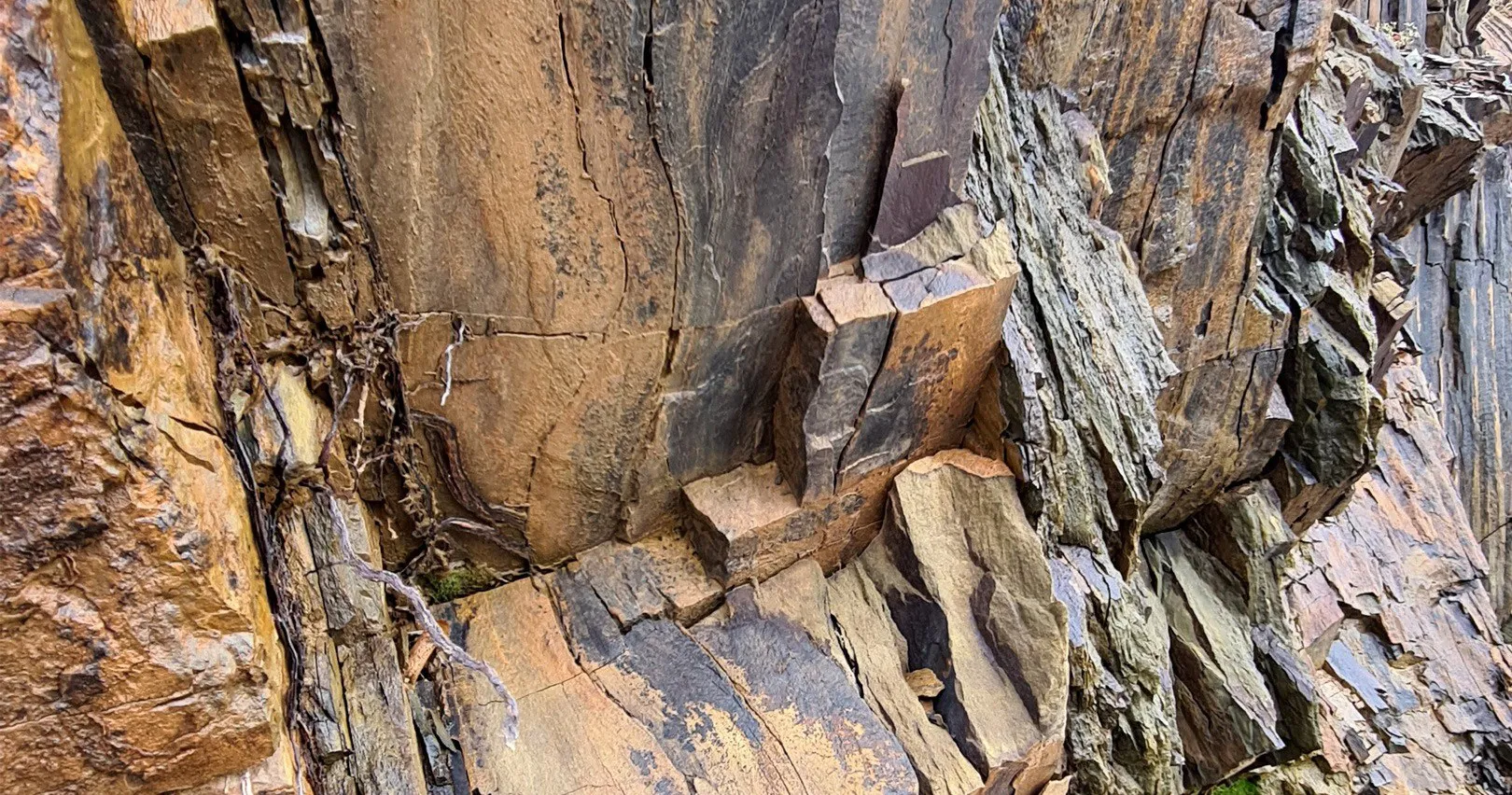
llicorella- black and reddish slate soil
This soil, nutrient-poor, free-draining, heat-retaining is what makes Priorat possible. Vine roots can penetrate deep into the fractured slate, finding moisture even in the region’s brutal, dry summers. The dark surface absorbs heat during the day and radiates it back at night, helping grapes ripen in what would otherwise be a challenging continental climate. And that quartz? It reflects sunlight up into the vine canopy, intensifying ripening and concentrating flavors.
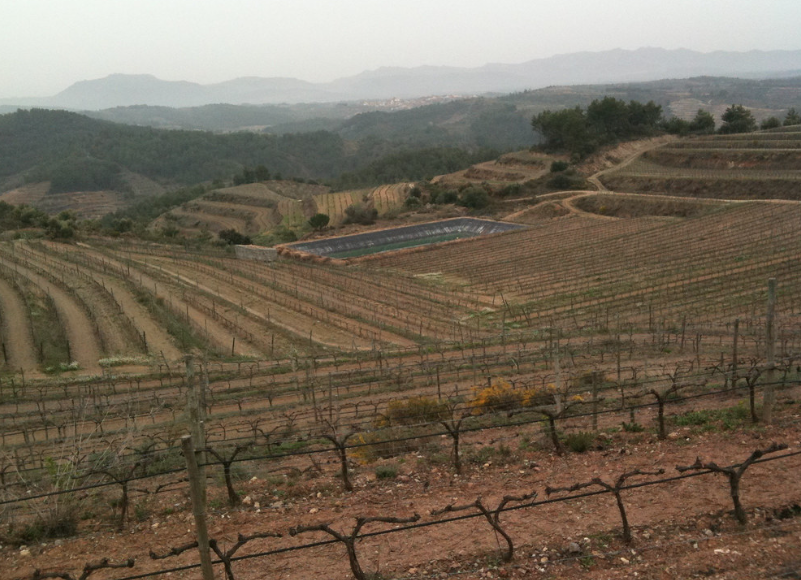
The terraced hillsides, costers in Catalan, can reach gradients of 60 percent. Most vineyards sit between 330 and 2,300 feet elevation, creating dramatic diurnal temperature swings that preserve acidity while allowing full phenolic ripeness. Summer temperatures can hit 95°F; winters drop to 25°F. Annual rainfall averages just 400-600mm, making Priorat one of Spain’s driest wine regions.
The result? Yields so low they’re almost comical: averaging less than 5 hectoliters per hectare, versus 25 hl/ha elsewhere in Spain. Old bush vines might produce just one bottle per plant. This scarcity, combined with the intense manual labor required to farm these slopes, means Priorat will never be cheap. But it also means concentration, intensity, and character you won’t find anywhere else.
The Monks, The Phylloxera, and The Gang of Five
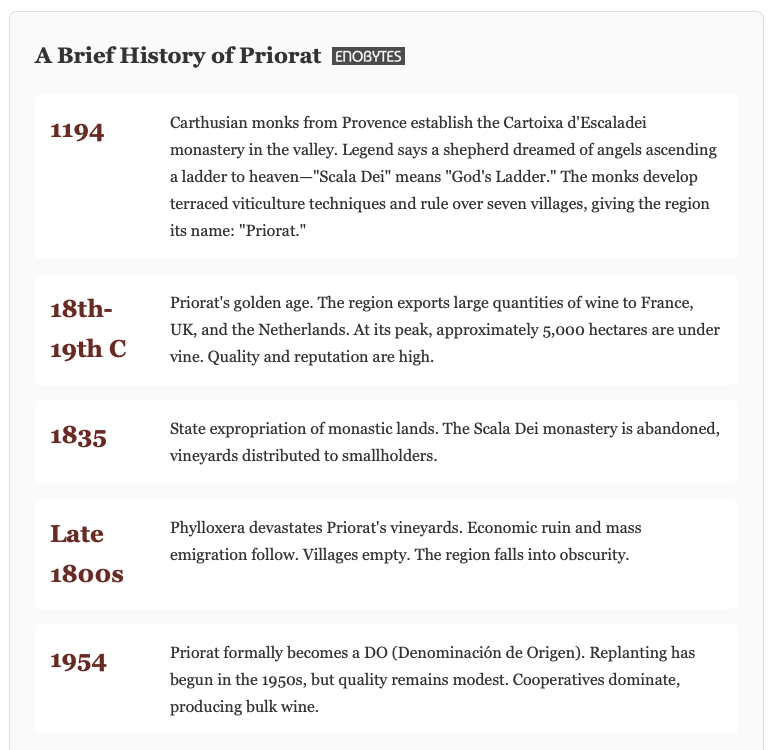
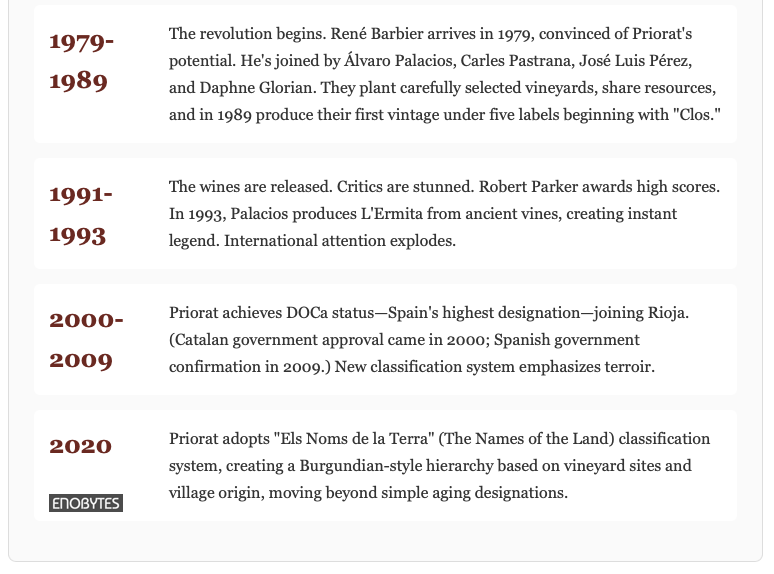
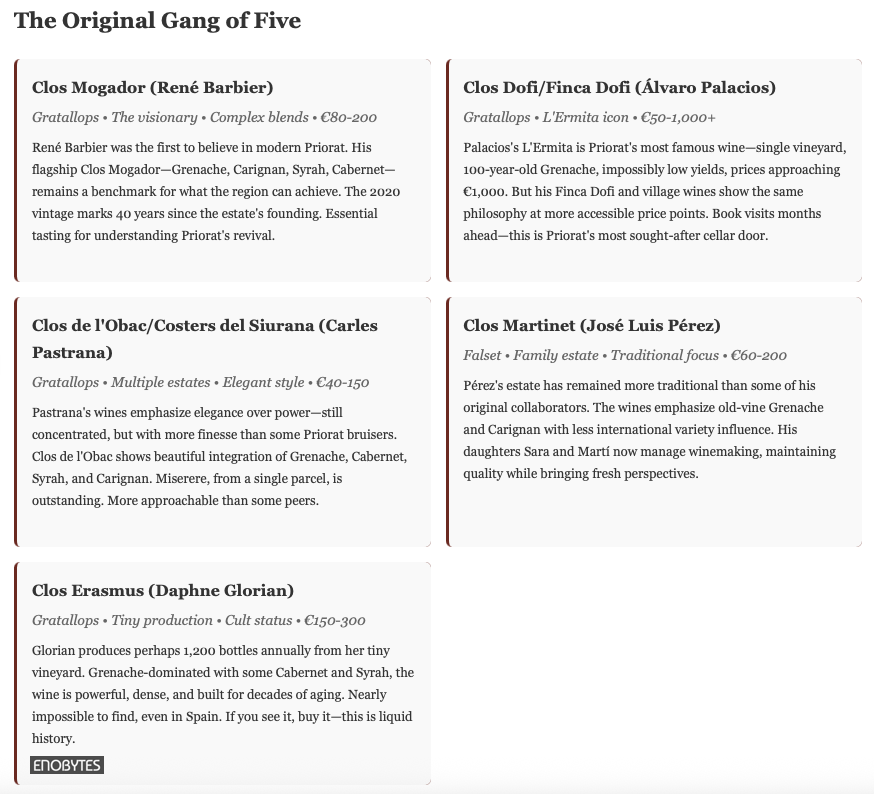
The “Gang of Five” story has been told so many times it’s achieved mythic status, but that doesn’t make it less remarkable. Five winemakers—René Barbier, Álvaro Palacios, Carles Pastrana, José Luis Pérez, and Daphne Glorian—bet everything on an abandoned region’s potential. For their first three vintages, they pooled resources and made one wine under five labels: Clos Mogador, Clos Dofi, Clos de l’Obac, Clos Martinet, and Clos Erasmus.
These wines weren’t trying to be anything but themselves: powerful, concentrated, mineral-laden reds that expressed llicorella and old vines with almost violent intensity. When critics tasted them, the reaction was seismic. Here was a Spanish wine region producing wines that could stand alongside Bordeaux and Burgundy, but with a character entirely its own.
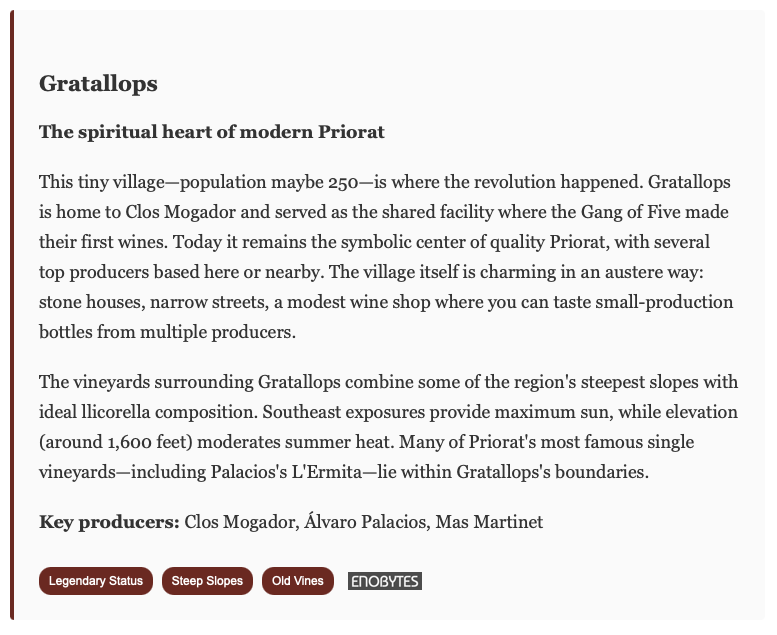
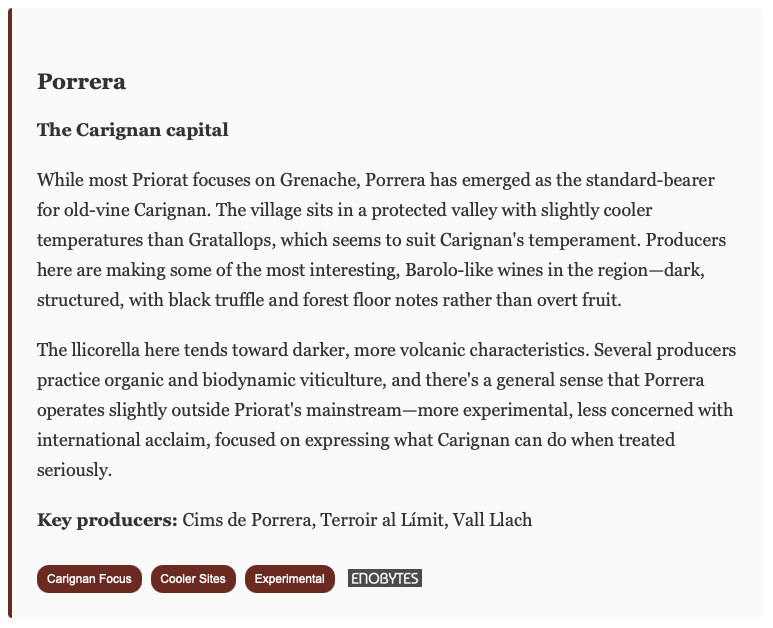
The Villages: Understanding Priorat’s Terroir Hierarchy
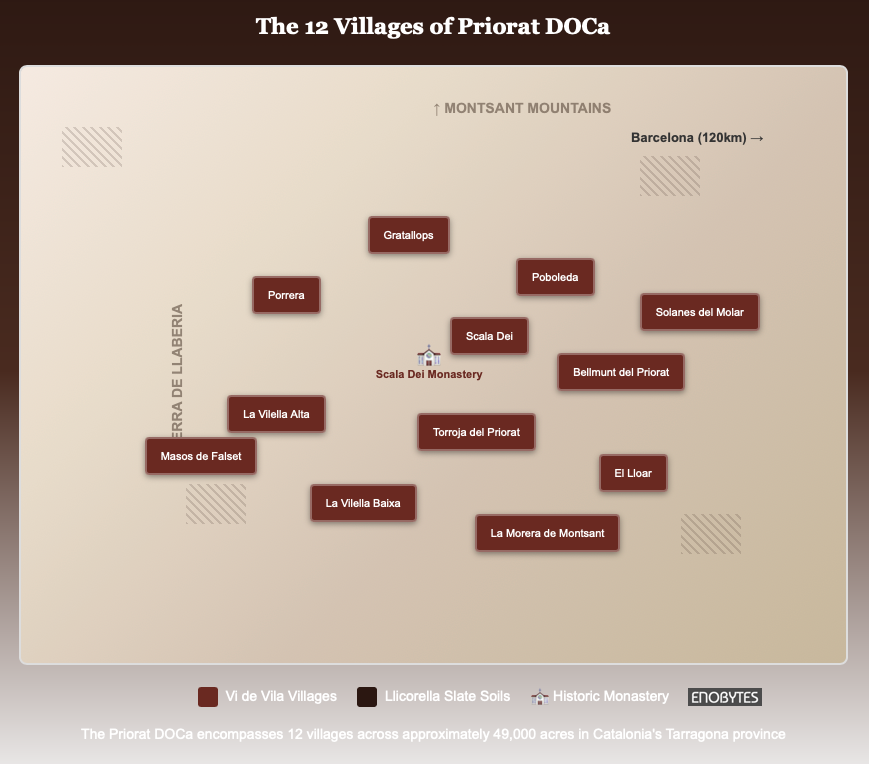
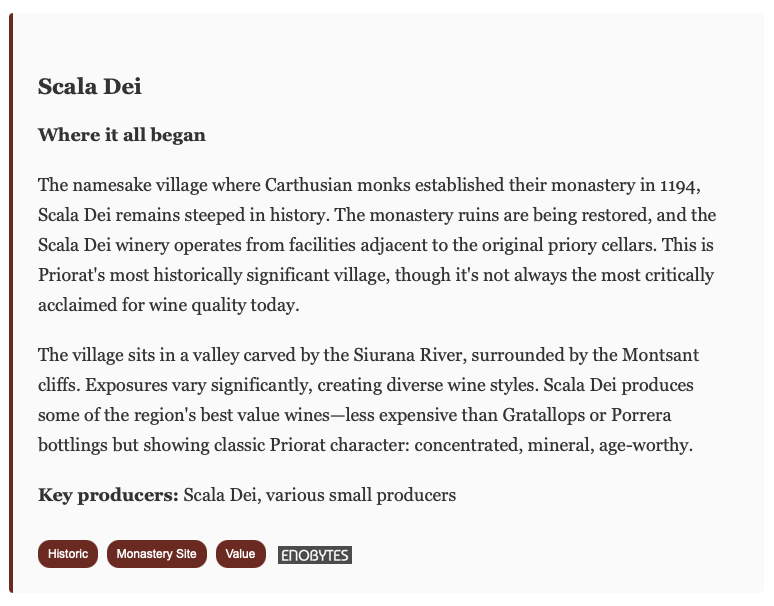
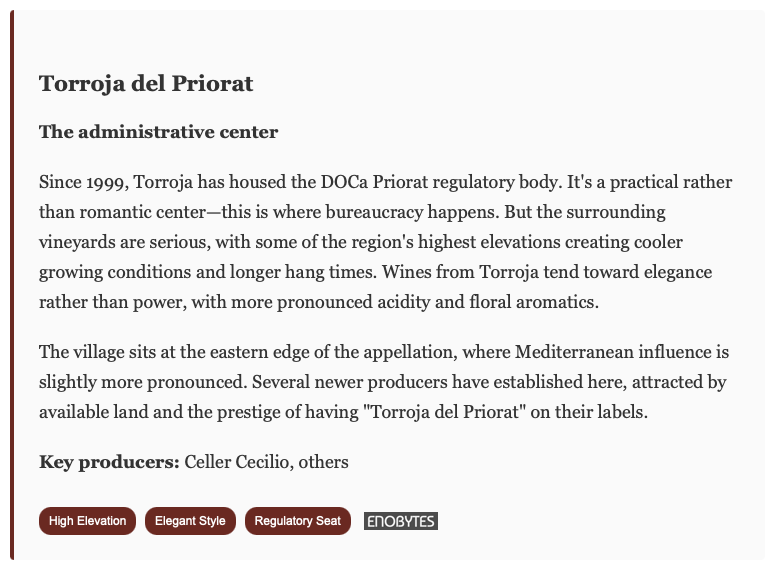
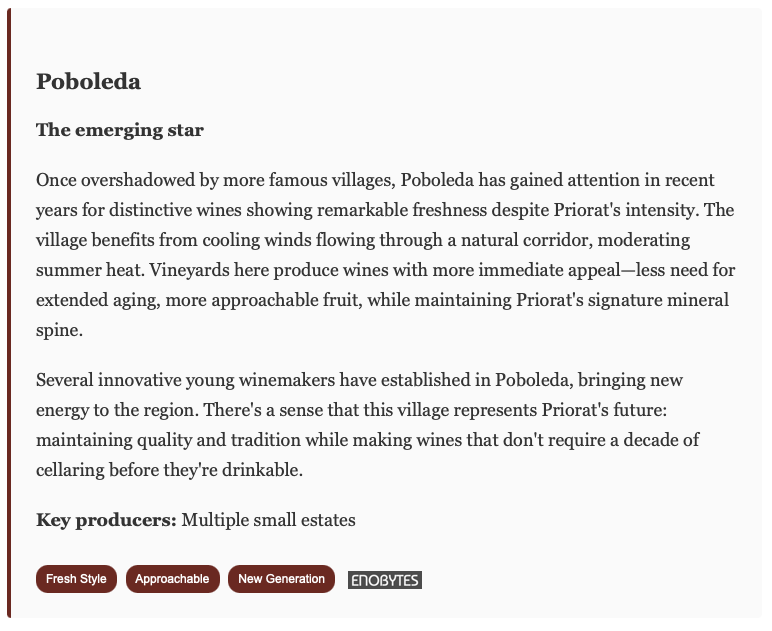
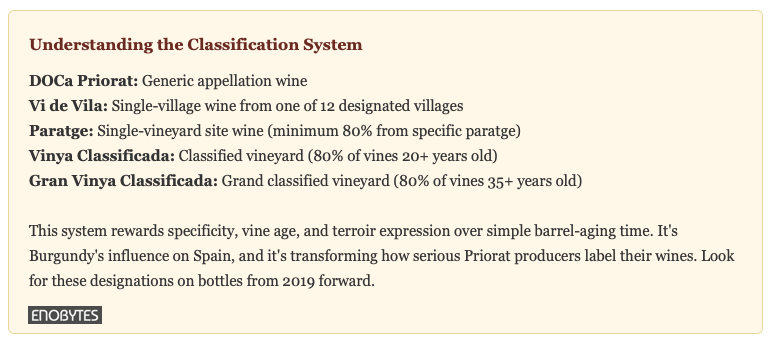
Priorat’s new classification system, adopted in 2020, creates a terroir-based hierarchy similar to Burgundy’s. At the base is generic DOCa Priorat. Above that comes “Vi de Vila” (village wine), from one of 12 designated villages. Then “Paratge” wines from specific named sites. “Vinya Classificada” designates single vineyards where 80% of vines are at least 20 years old. At the top, “Gran Vinya Classificada” requires 80% of vines be at least 35 years old. It’s a system that rewards age, specificity, and terroir expression over simple barrel-aging time.
The Varietals: Grenache, Carignan, and Friends
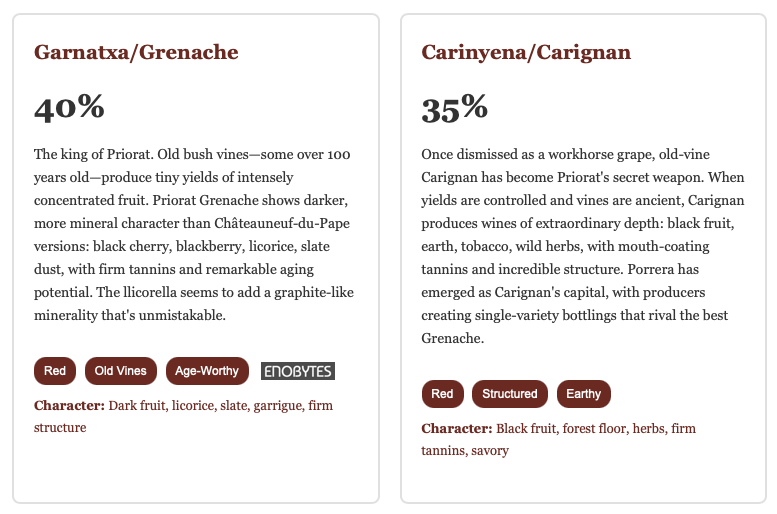
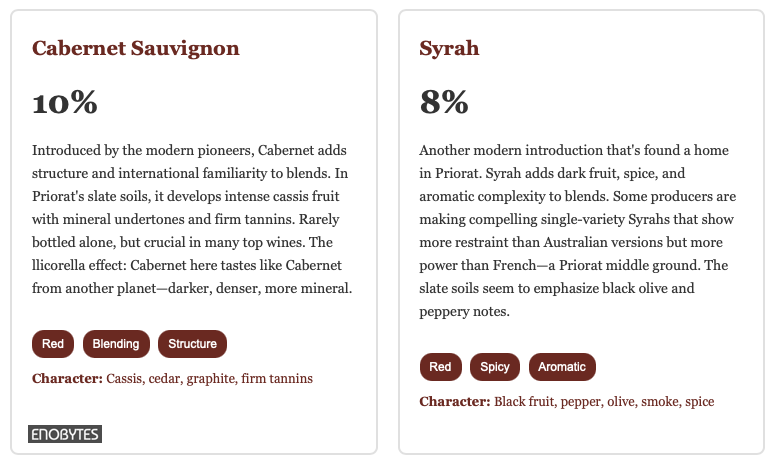
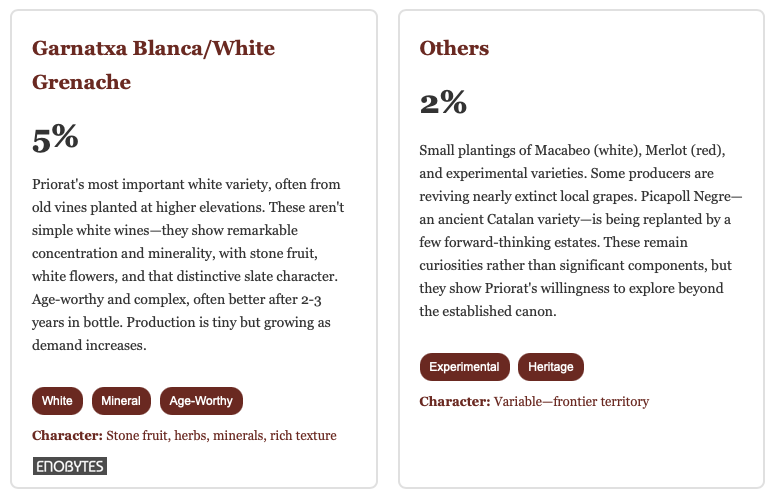
Priorat’s grape mix reflects its dual heritage: ancient indigenous varieties planted by monks centuries ago, and international varieties introduced by the modern pioneers. But two grapes dominate: Grenache (Garnatxa in Catalan) and Carignan (Carinyena or Samsó locally). Together they constitute about 75% of plantings, and the best Priorat wines showcase one or both.
Top Priorat Producers: The Essential Guide
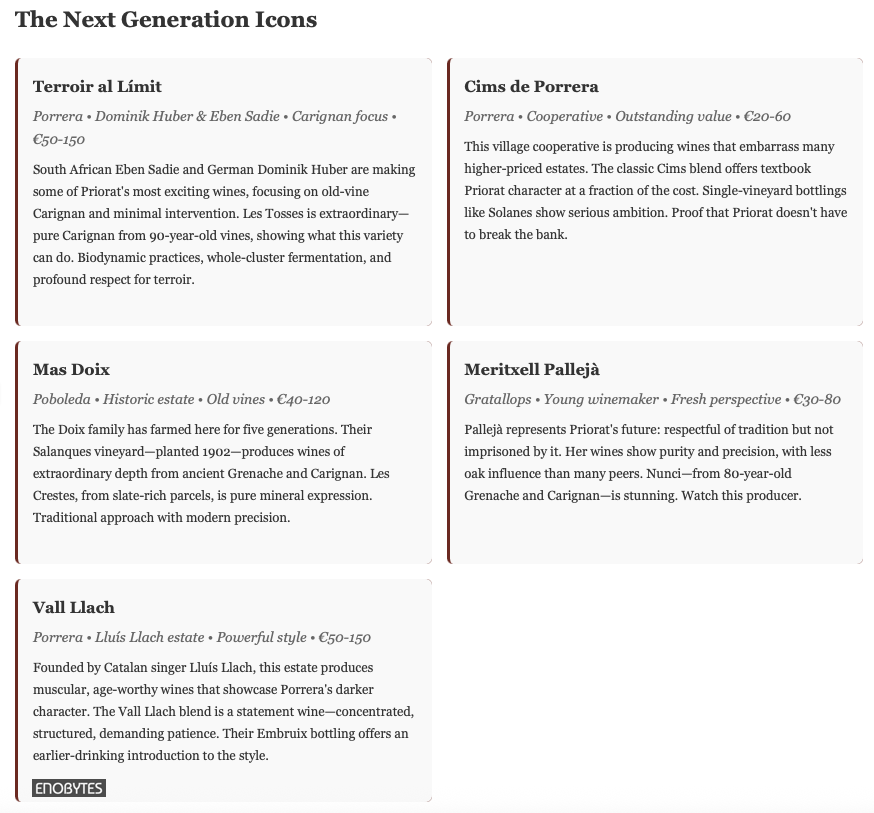
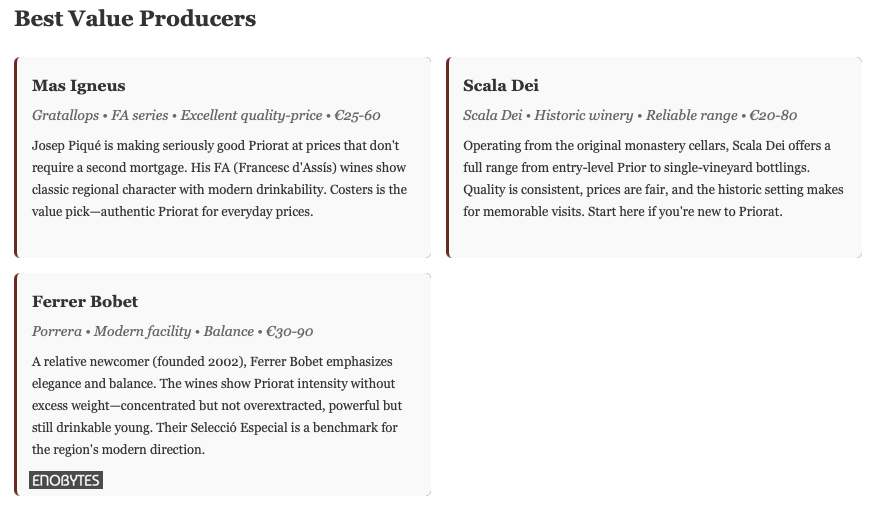
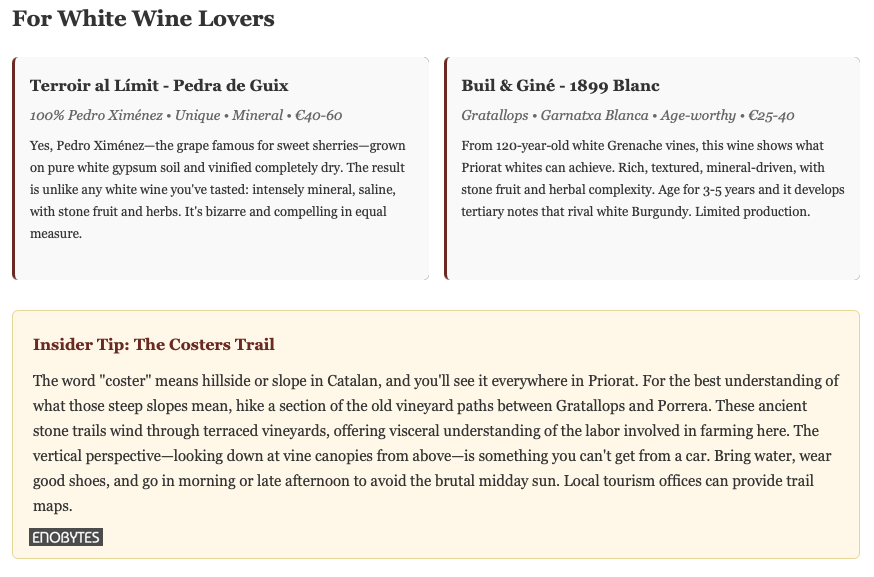
Priorat has over 100 producers, ranging from tiny garage operations to larger estates. Quality is generally high—this isn’t a region where you can cut corners and survive—but certain names stand out. I’ve organized them by category to help you prioritize limited tasting time.
Planning Your Visit
Getting there: Priorat is about 120km southwest of Barcelona, roughly 90 minutes by car. Take the AP-7 autopista toward Tarragona, then follow signs to Falset, the region’s commercial center. From Falset, wine villages radiate outward. The roads are narrow, winding, and steep—drive carefully. No public transportation serves the wine villages effectively, so a car is essential.
Where to stay: Options within Priorat are limited but charming. Gratallops has Cal Llop, a wine hotel with an excellent restaurant. Falset offers more choices, including Hotel Sport and several rural guesthouses. For luxury, stay in Siurana (Hotel Hostal del Siurana) overlooking the dramatic gorge. Many visitors base in Tarragona (40 minutes away) for coastal access and Roman ruins, or even Barcelona for day trips.
Best time to visit: Spring (April-May) offers wildflowers, comfortable temperatures, and fewer crowds. Autumn (September-October) is harvest time—spectacular but busy, and you’ll need reservations everywhere. Summer (June-August) is scorching; many locals flee the heat. Winter (November-March) is quiet, some wineries close, but you’ll have the region to yourself.
Book ahead: Most quality producers require advance reservations, often weeks or months for famous estates like Álvaro Palacios. Email or call directly. Many small producers don’t use online booking systems. Expect tastings to cost €20-50, often waived with purchase. Tours typically last 90 minutes and include vineyard walks (wear closed-toe shoes).
Language: Catalan and Spanish are spoken throughout. English is common at larger estates, less so at small producers. Basic Spanish helps significantly. Key wine terms: negre (black/red), blanc (white), collita (vintage), criança (aged), reserva (longer aging), gran reserva (extended aging).
What to eat: Catalan cuisine is hearty and wine-friendly. Try calçots (grilled spring onions with romesco sauce) in season (January-April), conejo con caracoles (rabbit with snails), and butifarra (Catalan sausage). Els Cups in Gratallops offers excellent local cooking with extensive Priorat by-the-glass selections. Les Cols in Olot (90 minutes away) holds two Michelin stars and an astounding wine list.
Costs: Priorat isn’t cheap. Tastings: €20-50. Wines: €25-200+ (with cult bottles reaching €1,000). Meals: €30-60 per person at good restaurants. Accommodation: €100-200 per night for nice rural hotels. Budget accordingly—this is Spain’s most expensive wine region for good reason.
Physical considerations: Vineyard visits involve walking on steep, uneven slate slopes. Wear sturdy shoes with good grip. Sun protection is essential. Bring a hat, sunglasses, and sunscreen. Summer temperatures can exceed 95°F; stay hydrated. If you have mobility issues, confirm accessibility when booking. Not all wineries can accommodate.
The Bottom Line
Priorat is not for everyone. The wines are intense, often high in alcohol (14-15.5%), tannic when young, and expensive. The region is remote, hot, and challenging to navigate. You’ll drive white-knuckled up mountain roads and pay €50 for a bottle that might need five years before it’s ready to drink. But for serious wine lovers, Priorat will steal your heart.
This is a region that produces wines of genuine individuality and world-class quality. The llicorella terroir creates a mineral signature unlike anything from Bordeaux, Burgundy, or Napa. Old vines, some over a century old contribute concentration and complexity that can’t be rushed. And the winemakers here, from the Gang of Five pioneers to the current generation of young vignerons, are creating wines that honor tradition while pushing boundaries.
The new classification system signals Priorat’s maturity as a region, moving beyond marketing terms to genuine terroir distinctions. This is a wine region confident enough in its identity to create hierarchies based on vineyard site and vine age rather than barrel time. That confidence is earned.
Visit now, while Priorat still feels more authentic than touristy. Walk those vertiginous vineyard paths. Taste 100-year-old Grenache and Carignan from vines that survived phylloxera and decades of obscurity. Buy bottles from small producers before allocation lists grow longer. And save some of what you buy. These are wines that reward patience, developing tertiary complexity over decades in the cellar.
Come prepared for intensity—of flavor, of landscape, of summer heat. Bring good shoes, an open mind, and a willingness to recalibrate your expectations of what Spanish wine can be. Leave with bottles that will make even jaded wine collectors lean forward and ask where you found them. And remember: it’s “pree-oh-RAHT,” the wines are as hard as the rocks they grow from, and yes, you should absolutely buy more than you think you need. These are wines worth hoarding.