

Carmenere is an interesting grape that you should try if you enjoy full bodied, balanced structured wines. If you’ve not tried one, select an audacious bottle from Chile, many of which are reasonably priced.
CARMENERE HISTORY
History of Carmenere:
- The grape originated in Bordeaux but was largely lost to disease by the late 19th century.
- Cuttings were brought to Chile in the 1800s where it thrived but was mistakenly labeled as Merlot.
- In 1994, DNA fingerprinting revealed Carmenere was its own variety, making Chile its new home.
- It’s now Chile’s signature red grape and an important part of the country’s identity.
CARMENERE FUN FACTS
Here are some fun facts about Carmenere wines from Chile:
- Carmenere grape vines have very deep root systems that can go down over 20 feet. This helps them withstand Chile’s extreme hot/dry climate.
- The first recorded planting of Carmenere in Chile was in 1850, but it wasn’t identified as its own varietal until 1994 through DNA analysis.
- Carmenere grapes have thicker skins than Merlot grapes, which is why Chilean Carmenere wines often have more structure and can age longer.
- Carmenere grapes ripen later than other red grapes like Cabernet Sauvignon. They are often one of the last varieties harvested each season in Chile.
- An excess of rain and cooler weather during ripening can produce Carmenere with herbal and green pepper notes on the nose and palate.
- The Colchagua Valley is considered the premier region for Carmenere due to its ideal clay soils and Mediterranean climate.
- The highest plantings of Carmenere worldwide are found in Chile – there are around 12,000 hectares planted.
- Top Chilean Carmenere producers like Montes and Errazuriz often release new vintages of the wine 6-10 years after the grapes were grown.
- Carmenere grapes resemble small blueberries in color when ripe, adding to the dark inky color of the finished wines.
CARMENERE GRAPE PROFILE
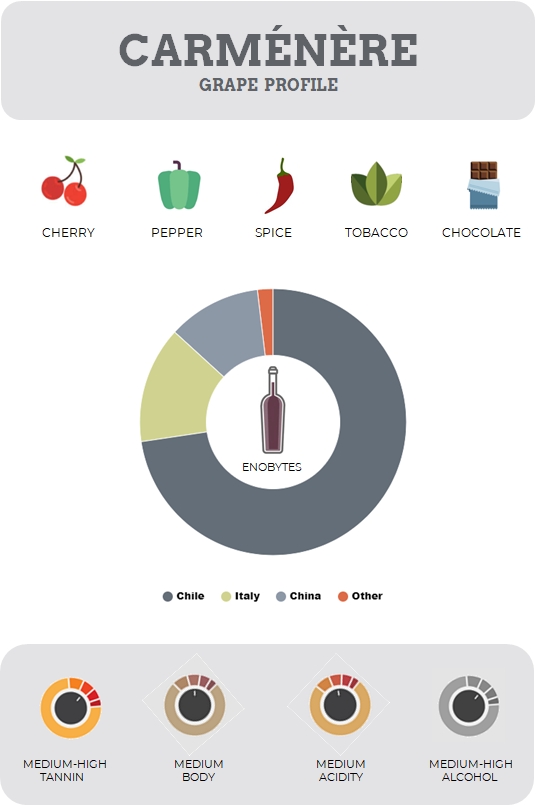
Carménère imparts cherry and blueberry fruit flavors with spicy and earthy notes with hints of dark chocolate, tobacco, and leather. The wine is best to drink while it is young, but some are definitely age-worthy!
CARMENERE CHARACTERISTICS
Here are some geek worthy details about the characteristics of Carmenere wines:
- Color – Carmenere produces deeply colored wines that are almost inky purple when young. As the wine ages the color will evolve to a darker ruby/garnet.
- Nose – The aromas often feature dark berry fruits like blackcurrant and black cherry. Common herbal/spice notes include tobacco, cocoa, vanilla, herbs de provence and sometimes a subtle smokiness.
- Palate – The flavors mirror the aromas with black fruit dominating. There are usually savory elements like tobacco, earth and occasionally roasted meats. Carmenere has firm, ripe tannins and noticeable acidity which lend structure and aging potential.
- Body – The body is usually full and rich with good concentration. Chilean Carmenere often has an inviting softness to the tannins despite their presence.
- Finish – Finishes are typically long with lingering flavors of fruit and spice. The acidity and tannins provide backbone and help the wine evolve in the glass or bottle over time.
- Ageability – Well-made Carmenere is built to age, often drinking best 5-10+ years after the vintage. The structure ensures it can hold up well as secondary flavors emerge.
- Food Pairings – Works well with grilled meats, game, hearty stews, aged cheeses. The dark fruits and savory notes complement barbecue and smoke flavors.
CARMENERE WINES TO TRY
If you’re looking for a few to try, here are a few that represent a range of styles from value to premium, all showcasing Chile’s well-suited terroir for Carmenere.
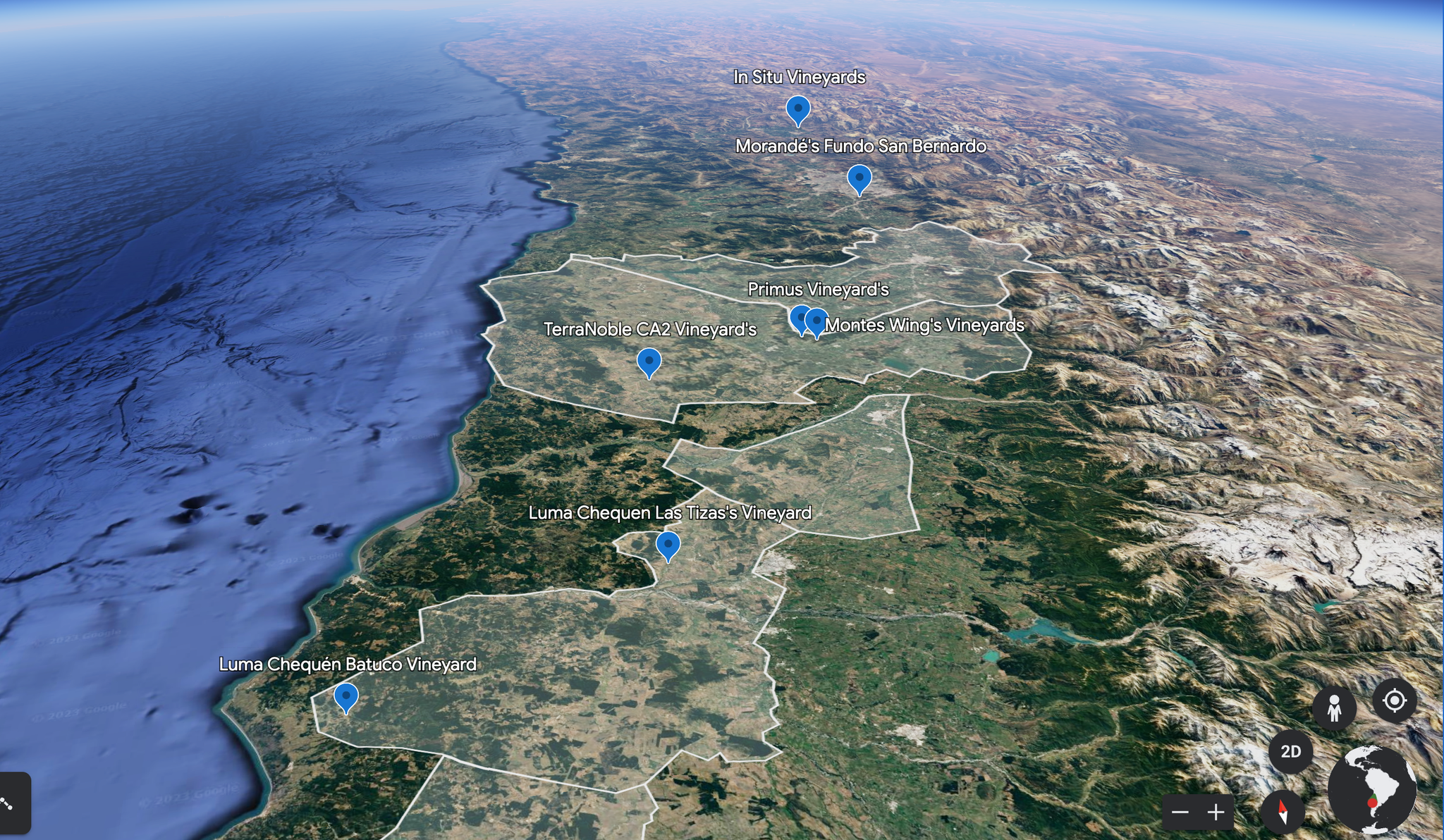
InVina Luma Chequen Gran Reserva Carmenere 2020 ($17)
Dark fruit, plum, tobacco. Medium body, soft tannins. Good value.
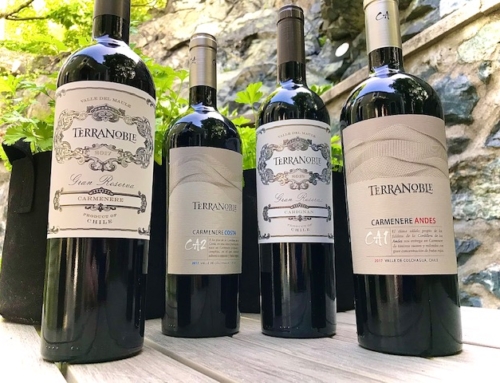
TerraNoble CA2 2020 ($36)
Concentrated black cherry, cocoa, spice. Full body, balanced acidity and tannins. Complex and age-worthy.
Montes Wings Carmenere 2020 ($55)
Refined, blackcurrant, dried herbs. Smooth texture, integrated oak. Elegant and food friendly. Store a few in your cellar; age-worthy beauty!
Morandé Vitis Única Carménère 2021 ($20)
Fresh, bright cranberry, and earth notes. Light to medium body, with bright acidity. Easy drinking, fruity style.
Primus Carmenere 2020 ($21)
Raspberry, tobacco leaf, rosemary. Medium+ body, peppery finish. Nicely integrated, versatile red.
Viña San Esteban In Situ Carmenere Reserva 2020 ($13)
Dark fruit, cinnamon. Soft, approachable tannins. Great value everyday drinker.






Carmenere is so fun to bring to a party and stump people! They always think it is Merlot or something else. Some of my favorites are from Chile, so I’ll see if I can find your suggestions at my wine store.
Ah yes, good callout Kris. I had a party a few weeks ago and challenged the room to guess what it was. Some guessed Melot, others, Cab or Malbec.